
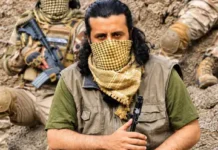






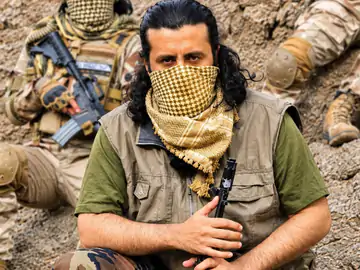
ISLAMABAD, Pakistan — For eight years, Rehman Gul wore the uniform of the Pakistani Army, serving within an institution that has long viewed itself as the ultimate guarantor of the nation’s unity and security. Today, however, the former captain stands at the helm of one of the state’s most lethal adversaries.The Balochistan Liberation Army, an armed separatist group fighting for the independence of Pakistan’s largest and poorest province, has named Mr. Gul as its new commander-in-chief, replacing Bashir Zeb. The appointment is more than a routine leadership shake-up. For the Pakistani military establishment, it is a sobering reminder of an unsettling vulnerability: the defection of its own trained officers to the insurgencies it is tasked with crushing.Mr. Gul, who also goes by the aliases Ustad Mureed and Mureed Baloch, hails from the Noshki district of Balochistan. According to accounts of his trajectory, his break with Islamabad began after he witnessed heavy-handed military operations in his home province. In 2010, he shed his official rank and crossed over to the insurgency.His defection represents a profound intelligence and operational blow to Rawalpindi, the garrison city housing the army’s general headquarters. During his nearly decade-long career in the regular army, Mr. Gul absorbed the military’s internal command structure, tactical doctrines, and counterinsurgency playbooks. Over the past sixteen years, he has steadily weaponized that insider knowledge against his former comrades, rising through the rebel hierarchy to serve as deputy commander before claiming the top post.Most notably, Mr. Gul played an instrumental role in training the Majeed Brigade, the separatist group’s elite suicide squad responsible for some of the deadliest attacks in the region. Security analysts note that his elevation comes after his predecessor, Mr. Zeb, was reportedly sidelined for failing to execute high-profile strikes. By placing a former army captain in absolute control, the insurgents are signaling an intent to bring greater tactical discipline and institutional insight to their asymmetric campaign.The trajectory of Mr. Gul underscores the deep-seated alienation driving the conflict in Balochistan. While the province holds vast reserves of natural gas, copper, gold, and coal, its indigenous population remains mired in poverty and political marginalization. Founded around 2000 on an ethnic-nationalist platform rather than a religious one, the Balochistan Liberation Army accuses the central government of plundering local wealth while denying basic rights to the Baloch people.That sense of grievance has been further inflamed by the China-Pakistan Economic Corridor, a multibillion-dollar infrastructure initiative that insurgents view as an extractive project designed to benefit Islamabad and Beijing at the expense of local residents.When those grievances penetrate the ranks of the state’s own security apparatus, the consequences become starkly visible. The Pakistani military has long relied on tight discipline and institutional loyalty to hold together a fractured federation. Yet the prolonged counterinsurgency in the southwest has tested the loyalties of native Baloch soldiers and officers, caught between their oaths to the state and their ties to a restive homeland.With Mr. Gul now directing operations, the Pakistani armed forces face a commander who knows how they think, how they deploy, and where their defenses are thinnest. In a conflict defined by attrition and distrust, the rebellion is no longer merely fighting the Pakistani military from the outside—it is being led by one of its own.