


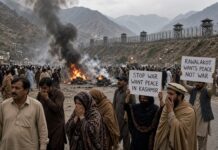




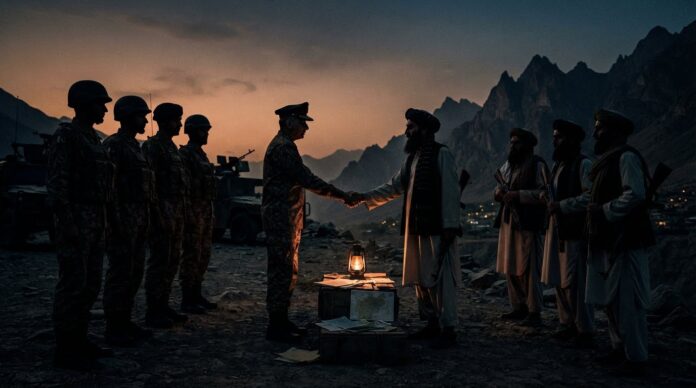
ISLAMABAD, Pakistan — For decades, Pakistan’s military and intelligence apparatus operated under a well-worn doctrine of asymmetric warfare, utilizing regional proxies to project power across its borders. But a sharp escalation of border clashes and a flurry of diplomatic warnings suggest that Islamabad may be deploying this familiar strategy against an unexpected target: its own historical allies, the Afghan Taliban.The alarm was sounded by Zalmay Khalilzad, the former United States special envoy to Afghanistan, who publically pointed to emerging reports that the Pakistani military has begun recruiting and arming Afghans to fight anti-Pakistan insurgents. “As things currently stand,” Mr. Khalilzad warned, “relations between Afghanistan and Pakistan are likely to get much worse.”While Pakistan’s Ministry of Information swiftly rejected the allegations as “baseless and misleading,” independent analysts and regional observers see the fingerprints of a deeply entrenched institutional habit. For the better part of forty years, Islamabad viewed the Afghan Taliban as a vital strategic asset—a sunni militant proxy capable of keeping rival India at bay and ensuring a friendly regime in Kabul. When the Taliban swept back into power in August 2021, the victory was quietly, and sometimes overtly, celebrated within Pakistan’s security establishment.That honeymoon, however, has disintegrated into a bitter, low-intensity border war. The source of friction is the Tehrik-e-Taliban Pakistan (TTP), an indigenous militant group separate from but ideologically identical to the Afghan Taliban. Islamabad has long accused Kabul of providing safe haven to TTP fighters, who have launched increasingly lethal cross-border raids against Pakistani security forces.Frustrated by Kabul’s refusal to rein in its ideological brethren, Islamabad appears to be reverting to its historical playbook: fighting fire with fire, or more accurately, proxies with proxies. Rather than relying solely on conventional military strikes—which have already sparked deadly artillery duels and airstrikes along the Durand Line—the military is reportedly cultivating cross-border Afghan factions to target the TTP inside Afghanistan, effectively challenging the Afghan Taliban’s domestic monopoly on violence.The strategy is fraught with immense peril. Historically, Pakistan’s reliance on militant proxies to achieve foreign policy goals has generated a catastrophic domestic blowback. Groups funded to fight abroad have repeatedly turned their guns inward, destabilizing Pakistan’s own provinces. By allegedly arming new Afghan factions to suppress the TTP, Islamabad risks opening a Pandora’s box of uncontrollable local militias, further destabilizing an already volatile border region.The consequences of this deteriorating relationship were on stark display along the north-western border, where Pakistani forces and Afghan Taliban personnel exchanged heavy artillery fire in the Kurram district of Khyber Pakhtunkhwa. Pakistani officials claimed to have destroyed Taliban border posts and neutralized militants attempting to cross the frontier.As the gunfire echoes through the Hindu Kush, the broader geopolitical calculus is shifting. The very proxies that Islamabad nurtured to guarantee its western flank have become its primary security threat. If the reports of Pakistan arming new Afghan proxies are validated, it signals a desperate gamble by a nuclear-armed state running out of options. In trying to contain the monsters of its past, Pakistan may simply be breeding the adversaries of its future.If you want to refine this piece further, let me know:• Should we focus more on the historical relationship between the ISI and the Taliban?• Do you want to add more details regarding the specific border clashes in the Kurram district?• Would you like to adjust the length or tone to fit a specific editorial column?