



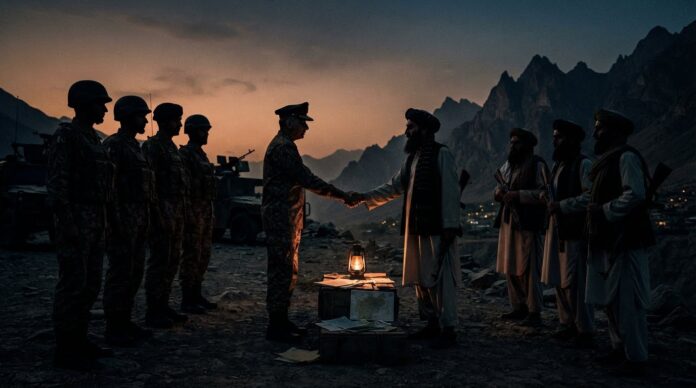
ISLAMABAD, Pakistan — For decades, Pakistan’s military and intelligence apparatus operated under a well-worn doctrine of asymmetric warfare, utilizing regional proxies to project power across its borders. But a sharp escalation of border clashes and a flurry of diplomatic warnings suggest that Islamabad may be deploying this familiar strategy against an unexpected target: its own historical allies, the Afghan Taliban.The alarm was sounded by Zalmay Khalilzad, the former United States special envoy to Afghanistan, who publically pointed to emerging reports that the Pakistani military has begun recruiting and arming Afghans to fight anti-Pakistan insurgents. “As things currently stand,” Mr. Khalilzad warned, “relations between Afghanistan and Pakistan are likely to get much worse.”While Pakistan’s Ministry of Information swiftly rejected the allegations as “baseless and misleading,” independent analysts and regional observers see the fingerprints of a deeply entrenched institutional habit. For the better part of forty years, Islamabad viewed the Afghan Taliban as a vital strategic asset—a sunni militant proxy capable of keeping rival India at bay and ensuring a friendly regime in Kabul. When the Taliban swept back into power in August 2021, the victory was quietly, and sometimes overtly, celebrated within Pakistan’s security establishment.That honeymoon, however, has disintegrated into a bitter, low-intensity border war. The source of friction is the Tehrik-e-Taliban Pakistan (TTP), an indigenous militant group separate from but ideologically identical to the Afghan Taliban. Islamabad has long accused Kabul of providing safe haven to TTP fighters, who have launched increasingly lethal cross-border raids against Pakistani security forces.Frustrated by Kabul’s refusal to rein in its ideological brethren, Islamabad appears to be reverting to its historical playbook: fighting fire with fire, or more accurately, proxies with proxies. Rather than relying solely on conventional military strikes—which have already sparked deadly artillery duels and airstrikes along the Durand Line—the military is reportedly cultivating cross-border Afghan factions to target the TTP inside Afghanistan, effectively challenging the Afghan Taliban’s domestic monopoly on violence.The strategy is fraught with immense peril. Historically, Pakistan’s reliance on militant proxies to achieve foreign policy goals has generated a catastrophic domestic blowback. Groups funded to fight abroad have repeatedly turned their guns inward, destabilizing Pakistan’s own provinces. By allegedly arming new Afghan factions to suppress the TTP, Islamabad risks opening a Pandora’s box of uncontrollable local militias, further destabilizing an already volatile border region.The consequences of this deteriorating relationship were on stark display along the north-western border, where Pakistani forces and Afghan Taliban personnel exchanged heavy artillery fire in the Kurram district of Khyber Pakhtunkhwa. Pakistani officials claimed to have destroyed Taliban border posts and neutralized militants attempting to cross the frontier.As the gunfire echoes through the Hindu Kush, the broader geopolitical calculus is shifting. The very proxies that Islamabad nurtured to guarantee its western flank have become its primary security threat. If the reports of Pakistan arming new Afghan proxies are validated, it signals a desperate gamble by a nuclear-armed state running out of options. In trying to contain the monsters of its past, Pakistan may simply be breeding the adversaries of future.
The KPK Experiment: Why the military’s next targets maybe the very parties that enabled it?
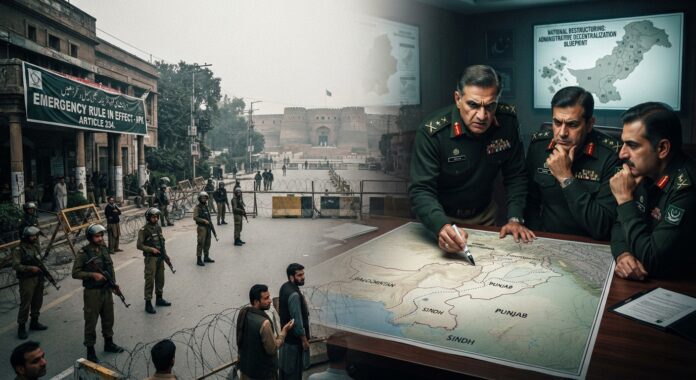
The military-backed imposition of emergency rule in Khyber Pakhtunkhwa represents a profound constitutional threshold, exposing deep fissures within Pakistan’s political system. By invoking Articles 232 and 234 of the Constitution to suspend the elected provincial government, Islamabad has ostensibly moved to address a volatile combination of militant violence and administrative defiance. Yet, behind the official rhetoric of stabilization and national security, senior bureaucratic and intelligence insiders warn of a far more expansive, clandestine agenda orchestrated by the country’s powerful military establishment.
According to high-level defense and administrative sources speaking on the condition of anonymity, the suspension of civilian authority in Peshawar is not an isolated crisis. Rather, it serves as the testing ground for a sweeping, strategic blueprint intended to restructure the federal map of Pakistan. High-ranking military planners are reportedly aiming to use the current intervention to establish a precedent for similar executive takeovers across other provinces. The ultimate objective, sources say, is a radical re-engineering of the state: a deliberate policy to dismantle the country’s large, historically entrenched provincial blocs and divide the federation into dozens of smaller, highly centralized administrative units.
For decades, Pakistan’s expansive provinces—most notably Punjab and Sindh—have functioned as formidable bastions of regional political identity and economic weight. These large territorial entities have historically possessed the legislative and demographic power to resist the centralizing impulses of the military headquarters in Rawalpindi. By engineered fracturing of these massive territories under the rubric of administrative efficiency and improved governance, the military leadership seeks to dilute strong regional consensus, neutralize eth-nationalist resistance, and govern a fragmented polity with far less friction. It is a calculated return to a classic doctrine of fragmented administrative control.
This overarching strategy exposes the precarious position of Pakistan’s nominal civilian rulers, Prime Minister Shehbaz Sharif’s Pakistan Muslim League-Nawaz (PML-N) and President Asif Ali Zardari’s Pakistan Peoples Party (PPP). In consenting to the federal takeover of Khyber Pakhtunkhwa to suppress their mutual populist rival, the imprisoned former Prime Minister Imran Khan, the PML-N and PPP have effectively accelerated their own political marginalization. By validating the exact mechanisms of executive overreach and governor’s rule to achieve short-term political containment, the ruling coalition has legitimized an interventionist framework that will almost certainly be turned against them when their utility to the state concludes.
The historical irony is stark. Both the PML-N and the PPP have historically staked their institutional identities on the defense of provincial autonomy, a decades-long struggle that culminated in the landmark passage of the 18th Amendment to the Constitution. This critical piece of legislation significantly devolved fiscal and administrative powers from Islamabad to the provinces, acting as a structural barrier against centralized authoritarianism. Today, that hard-won democratic framework faces systematic dismantlement. By inviting federal intervention and normalizing the removal of elected provincial leaders, the civilian coalition has actively dismantled its own legislative legacy.
They have traded the long-term structural viability of civilian democracy for immediate political survival, seemingly blind to the reality that a military-driven agenda to partition the provinces leaves no room for the expansive, patron-heavy machines of traditional dynastic politics. In a balkanized administrative landscape governed by centralized micro-units, the massive political machines of the Sharif and Zardari families lose their primary currency: the ability to wield large-scale provincial budgets to secure regional loyalty.
The long-term consequences of this systemic overreach are already alarming intelligence analysts. Internal state assessments have explicitly cautioned that heavy-handed federal intervention risks triggering severe, long-term civil unrest. Forcing direct rule from Islamabad onto an already aggrieved and deeply polarized population threatens to unite disparate political factions, regional nationalists, and volatile local groups in a unified, destabilizing backlash against the center.
As the military establishment quietly positions its administrative chess pieces to permanently redraw the boundaries of the federation, the Sharif and Zardari dynasties find themselves trapped in a structural trap of their own making. Having traded the sanctity of constitutional norms for the temporary favor of the generals, they are discovering too late that in the military’s blueprint for a fragmented, tightly controlled Pakistan, civilian intermediaries are entirely disposable.
Behind Pakistan’s Kashmir Elections, a Deepening Crackdown Prompts Threats to Cross Border
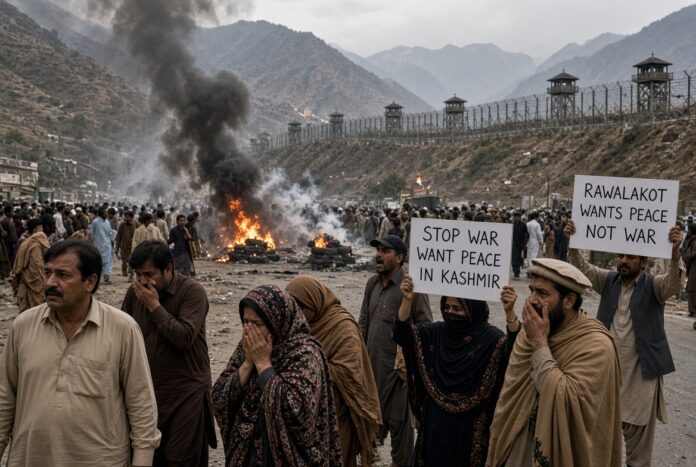
Weeks after regional polls, state violence against protesters has pushed the territory to a breaking point, with residents threatening to breach the Line of Control.
RAWALAKOT, Pakistan-administered Kashmir — The multi-phase legislative elections held here over the summer were heavily promoted by Islamabad as a vital exercise in regional democracy. Instead, they have pushed this highly volatile, mountain-fringed territory to the precipice of a historic breakdown.
Weeks after the final ballots were cast, the nominally autonomous region—known locally as Azad, or Free, Kashmir—remains deeply paralyzed. A heavy-handed campaign of state violence against a grassroots civil rights movement has completely hollowed out the political process. What began months ago as economic agitation over flour subsidies and skyrocketing electricity tariffs has transformed into a dangerous geopolitical crisis. Desperate and angry, local residents are now threatening to shatter decades of strategic defense by breaching the heavily militarized Line of Control (LoC) that divides the region from India.
“The election changed nothing; it only gave a violent regime a false sense of legitimacy,” said Hamza Naseer, 34, a local trader in Rawalakot whose storefront was heavily damaged during recent clashes. “They came into our towns with federal paramilitaries, cut our internet, and fired live ammunition into unarmed marches. We are being treated like subjects under a foreign occupation. If Islamabad keeps choking us, we have no choice but to break the fences and cross the border. Let them shoot us at the Line of Control instead.”
At least 90 protesters have been killed and hundreds wounded since June. The violence is fueled by the actions of the Jammu Kashmir Joint Awami Action Committee (JAAC), a popular civil coalition of traders, lawyers, and students that organized a widespread election boycott. Tensions reached a boiling point when the regional Supreme Court upheld a controversial law reserving 12 of the legislature’s 53 seats for Kashmiri refugees living outside the territory in mainland Pakistan. Locals argue the mechanism allows the federal government to manipulate local governance by leveraging voters who do not live with the daily economic realities of the region.
The Pakistani state’s response has been unyielding. Paramilitary forces have locked down major urban hubs like Muzaffarabad and Mirpur. Internet blackouts have blocked access to banking, and a sweeping media crackdown has largely barred independent journalists from reporting on the scale of the unrest. Regional authorities have defended the measures, branding the protesters not as political dissidents but as dangerous rioters.
“We are witnessing a structural collapse of the decades-long political arrangement between Islamabad and this territory,” an Islamabad-based political analyst specializing in Himalayan border disputes told South Asia Press. “By criminalizing a mainstream, highly popular movement that demands genuine local representation, the Pakistani state has completely alienated the population. The explicit threat by locals to cross the Line of Control is no longer just empty political rhetoric. It is a symptom of total political despair and a complete rejection of the status quo.”
For decades, Pakistan has positioned itself on the global stage as the primary diplomatic champion of Kashmiri self-determination against Indian administration across the border. Yet on the ground in towns like Rawalakot, that foundational state narrative is fraying rapidly. Frustrated by an economy ruined by weeks of curfews, communication blockouts, and arbitrary arrests, some local leaders in frontier sectors like Hajira have made emotional, unprecedented public appeals toward the Indian-administered side, asking for food and advocating for a complete reunification of the divided territory.
The crisis has already drawn international alarm. The UN High Commissioner for Human Rights, Volker Türk, has publicly urged all sides to halt the escalation and demanded an independent investigation into the mounting civilian casualties.
The systemic nature of the breakdown was laid bare last week. While the legislative assembly rushed to elect Najeeb Naqi Khan to the ceremonial post of president in an effort to project stability, seven of the region’s parliamentary seats remain entirely vacant. The scale of the turmoil and the intensity of the boycott made voting physically impossible in the very districts at the center of the protest movement.
“The political elite are voting in secure rooms while the streets are covered in tear gas,” said Maryam Bibi, a schoolteacher from Muzaffarabad. “They tell us we are free, but they kill us for asking for fair votes and basic rights. The border fences used to terrify us. Now, looking across the Line of Control seems like our only exit.”
Pakistan’s Bounty on Masood Azhar Looks Like Theater, Not Policy
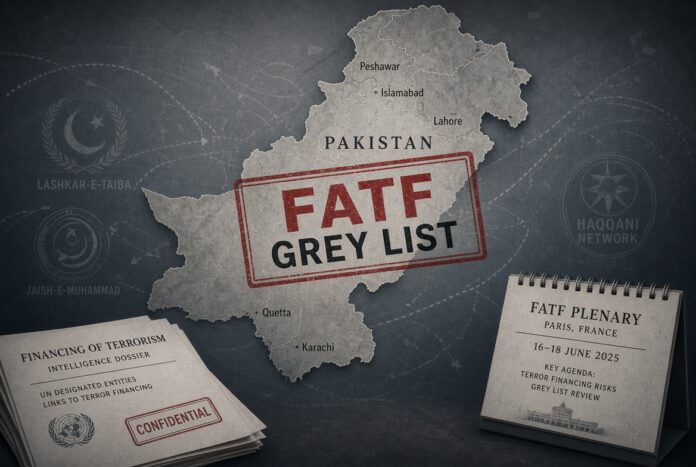
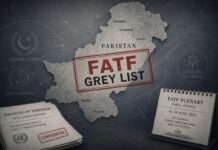
PARIS: Pakistan has placed a reward of 7 million (70 lakhs) PKR on Jaish-e-Mohammed founder Maulana Masood Azhar, added him to the Federal Investigation Agency’s Red Book of most-wanted suspects, and floated reports that he has left the country for Afghanistan. The timing is not subtle. The Financial Action Task Force holds its next plenary in Paris later this month. Islamabad wants the appearance of action against a man whose group has been linked to some of the deadliest attacks on India in a generation.
Azhar is no mystery figure. After his release from an Indian jail in the 1999 Kandahar hijacking, he re-emerged in Pakistan and built JeM into a capable proxy. Indian investigators hold him responsible for the 2001 Parliament attack and the 2019 Pulwama bombing that killed 40 paramilitary personnel. Intelligence assessments have long placed him inside Pakistan, including a reported sighting last year in Gilgit-Baltistan, far from his traditional Bahawalpur base. Kabul has now publicly rejected Pakistani claims that he is operating from Afghan soil. The Taliban government said its territory would not be used against other countries.
This is not the first such performance. In 2021 the same agency offered 50 lakh rupees for information leading to Azhar’s arrest. He was not arrested. Fundraising by UN-designated groups such as JeM and Lashkar-e-Taiba has continued in Pakistani cities with a visibility that would be impossible without official tolerance. Pakistan spent four years on the FATF grey list, from 2018 to 2022, precisely because of weak enforcement against terror finance and UN-sanctioned individuals. It exited that list after demonstrating paper progress. The networks themselves did not disappear.
The pattern is familiar. When scrutiny intensifies, Islamabad announces a list, a reward, or a rhetorical rebranding. Baloch insurgents become “Fitna al-Hindustan.” The Tehreek-e-Taliban Pakistan is recast as an Indian creation. These labels do not change the fact that groups useful against India have historically enjoyed space, logistics, and protection from elements of the security establishment. Treating them as disposable assets for an asymmetric campaign is not a secret; it is a long-standing strategic choice.
FATF and its regional counterpart, the Asia/Pacific Group on Money Laundering, exist to close exactly these gaps: enactment of laws, investigation of suspicious transactions, implementation of financial sanctions, and genuine disruption of designated entities. A bounty that is never collected and a Red Book entry that produces no extradition or trial do not meet that standard. They are optics timed for a closed-door review in Paris.
Western governments and international bodies have been here before. They accepted incremental compliance reports while the underlying infrastructure of recruitment, funding, and operational planning remained intact. That approach has costs. It signals that symbolic gestures are sufficient, that proxies can be maintained so long as they are occasionally denounced on paper, and that accountability can be postponed until the next plenary cycle.
The October meeting should treat the latest announcement as evidence of continuity, not reform. FATF members should demand verifiable disruption: the location and status of Azhar and other listed figures, the freeze of associated financial channels, and an end to the open collection of funds. Lists of 26/11 facilitators that sit unused do not constitute enforcement. If Pakistan continues to treat designated terrorists as strategic assets while presenting rewards as proof of seriousness, the appropriate response is renewed grey-listing or stronger measures, not another round of cautious praise for process.
The West and the FATF have the tools. What they have lacked is the willingness to treat Pakistan’s terrorism linkages as a persistent policy rather than a series of unfortunate lapses. A 70-lakh (7 million) PKR bounty does not change that record. It merely restates it in the language of public relations.
Pakistan’s High-Wire Diplomacy Is Showing Its Limits
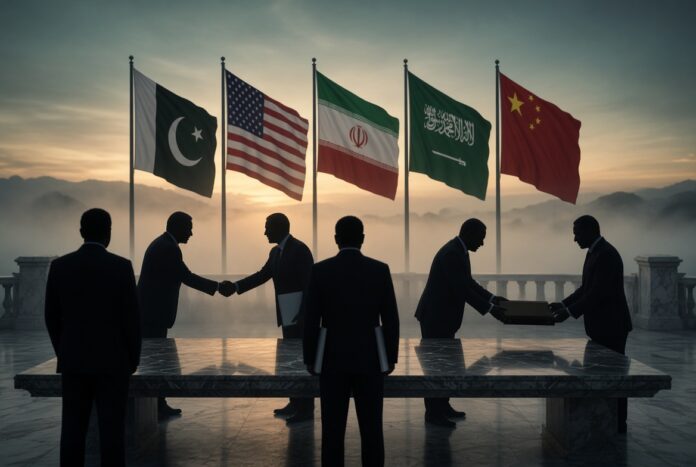
ISLAMABAD — For much of the past year, Pakistan has sold itself as the indispensable interlocutor of a fractured Middle East: defense partner to Saudi Arabia, back channel between Washington and Tehran, and “all-weather” ally of China. This week’s fighting between Saudi forces and Iran-backed Houthis has put that pitch under strain, exposing a gap between the commitments Islamabad has signed and what it can actually deliver.
The test is concrete. In September 2025, Prime Minister Shehbaz Sharif and Crown Prince Mohammed bin Salman signed a Strategic Mutual Defense Agreement. In August 2026, that arrangement widened into the Mecca Joint Defense Agreement with Turkey, under which an armed attack on one is treated as an attack on all. Pakistani troops and jets are already in the kingdom. Yet when Houthis struck Saudi targets this month, Islamabad publicly said no military response was under discussion. It instead delivered Riyadh’s warning to Tehran and placed a call from Field Marshal Asim Munir to Iranian Foreign Minister Abbas Araghchi to “de-escalate on all fronts.”
That dual posture is the strategy, not a slip. Pakistan shares a long, restive border with Iran, hosts a large Shiite population, and depends on energy routes that Tehran and the Houthis can disrupt. Saudi Arabia, by contrast, is a source of cash, fuel, remittances and political cover. A Pakistani official told Reuters the country was “trying to keep a low profile” because “it does not want to spoil relations with Iran.”
The same pattern marked the U.S.-Iran war. Munir hosted talks, chaired marathon sessions with Vice President JD Vance and Iranian officials, and helped produce a June “Islamabad Memorandum of Understanding.” The memorandum did not hold. Iran at times dismissed Pakistan as too close to Washington; Gulf partners, notably the United Arab Emirates, pulled financial support even as Riyadh extended new loans. Islamabad then sought a large U.S. financing package tied to its peacemaking role.
Critics call this overpromise. Marcus Andreopoulos argues that Chinese arms reportedly transiting Pakistan, combined with Islamabad’s dependence on Beijing, undercut any claim to impartial mediation. Farzana Shaikh of Chatham House is blunter about capacity: Pakistan “does not have the kind of wherewithal or indeed experience that Qatar and Oman would have brought to the table,” she said, adding that its role owes much to the personal rapport between President Trump and Munir.
Pakistani and regional analysts describe something less theatrical than deceit and more structural than strategy. Kamran Bokhari notes that Tehran talks to Islamabad precisely because Pakistan can carry messages to Riyadh and Washington — but that “relaying and shaping messages is one thing, and active air-defense or intelligence support is another.” Umer Karim of the King Faisal Center has said the tightrope works only while talks continue; if hostilities restart, “this strategy may collapse.” Ayesha Siddiqa has warned that a formal Saudi security commitment makes genuine neutrality in a factionalized region nearly impossible.
China remains the fourth pole. CPEC still defines the economic relationship, even as Pakistani writers such as Imtiaz Gul record Chinese questions about governance, contract enforcement and whether Islamabad wants development or a starring diplomatic role. Washington, meanwhile, is being courted as a source of capital and political prestige. The result is a state that tells each capital it is indispensable, then delivers the minimum required to keep all four relationships alive.
That is not the same as having no policy. Emil Avdaliani of the Arab Gulf States Institute in Washington describes a transactional hedge: use the Saudi pact as a deterrent, use Iran channels to avoid a two-front nightmare, and convert geographic vulnerability into diplomatic relevance. The Belfer Center’s assessment is similar: multi-alignment can work until a crisis forces a choice. The Houthi-Saudi clash is that choice in miniature. Islamabad can still pass messages. What it has not shown is that it can honor a collective-defense clause, lock in a durable U.S.-Iran settlement, and satisfy Beijing’s economic expectations at the same time. The promises are large. The delivery, so far, is partial.
Islamabad Bred Terror. Now It Bites.
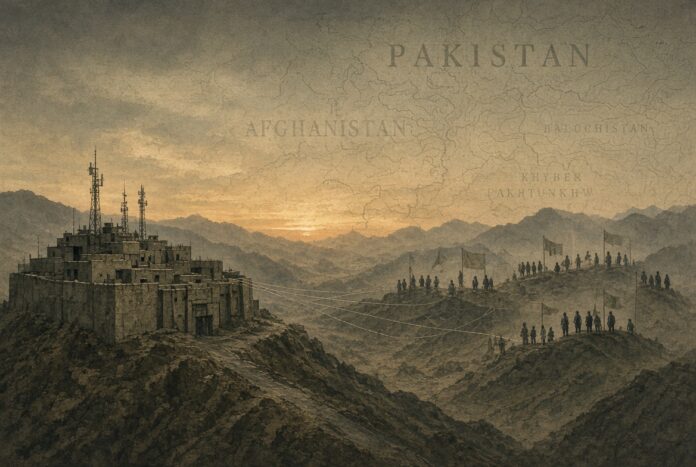
ISLAMABAD — For more than thirty years, Pakistan’s military and intelligence services treated the Afghan Taliban as an instrument of statecraft. The group was meant to deliver “strategic depth”: a compliant, Pashtun-dominated government in Kabul that would keep India out and secure Pakistan’s western border. That long wager is now coming due in Pakistani blood.Since the Taliban recaptured Afghanistan in August 2021, the Tehrik-e-Taliban Pakistan, or T.T.P., has rebuilt itself as the country’s deadliest insurgent force. United Nations monitors and independent researchers say a reconstituted Al-Qaeda has helped make the campaign more capable — supplying training, logistics, strategic advice and a tighter propaganda machine. In April, Al-Qaeda’s media wing, Al-Sahab, publicly endorsed T.T.P. operations against Pakistan for the first time, a shift from quiet assistance to open alignment.The numbers are grim. Pakistan ranked first on the 2026 Global Terrorism Index. Terrorism-related deaths reached 1,139 in 2025, the highest since 2013; the T.T.P. accounted for more than half. Militant violence has climbed every year since the Taliban returned to Kabul. Khyber Pakhtunkhwa and Balochistan, the provinces along the Afghan frontier, absorb nearly all of it. Checkpoints, convoys and police posts are routine targets. A May attack on a police facility in the northwest killed 21 people. An October 2025 ambush near the border killed 11 soldiers. 2025 was the deadliest year for Pakistani security forces in more than a decade.This is not a sudden rupture. It is the late harvest of a policy Pakistani officers long described as hedging. In the 1990s, Islamabad recognized the Taliban emirate and helped it take Kabul. After 2001, Pakistan accepted American aid as a major non-NATO ally while allowing Taliban leaders and the Haqqani network to regroup on its soil. The calculation was that Washington would eventually leave, and a Taliban government would then repay the debt by restraining anti-Pakistan militants. When Kabul fell, the Inter-Services Intelligence chief flew in within days. The expected payoff never arrived.Instead, the Afghan Taliban issued identity documents, housing and stipends to T.T.P. and Al-Qaeda figures, according to U.N. reporting. Fighters move across a porous border that Pakistan itself helped keep informal for decades. A December 2025 U.N. assessment called Al-Qaeda a “service provider” for militant groups in Afghanistan — training, advice, logistics. Amira Jadoon of Clemson University told Radio Free Europe/Radio Liberty that the Al-Qaeda–T.T.P. relationship now runs “from practical support at the base to narrative integration at the top.” A Pakistani researcher who asked not to be named called the ties “deep-rooted and even stronger.”Al-Qaeda’s South Asian branch, AQIS, has also helped professionalize T.T.P. propaganda after a former AQIS figure took charge of the T.T.P.’s media arm. The network’s reach has widened toward other groups, including Baloch separatists and a smaller coalition known as Ittihad-ul-Mujahideen Pakistan. The Afghan Taliban publicly deny harboring terrorists. Pakistan’s military says a large share of infiltrating units are Afghan nationals. Cross-border airstrikes and artillery exchanges have followed, closing crossings and inflaming a relationship that was supposed to be fraternal.Pakistani officials still prefer to speak of Indian sponsorship and Afghan bad faith rather than of their own archive of choices: the distinction between “good” and “bad” Taliban, the sanctuaries that survived the American war, the assumption that ideological cousins would police one another. The T.T.P. was born in 2007 among tribesmen shaped by the Afghan Taliban’s example. Al-Qaeda, driven from Afghanistan after 2001, found shelter in the same tribal belt. The three strands were never fully separate. With the Taliban in power, they have been braided tighter.The result is a state fighting an insurgency that its own long game helped incubate. Pakistan can strike across the Durand Line and demand that Kabul dismantle camps. It cannot easily unwind the political and religious networks it spent a generation protecting. The price of harboring the Afghan Taliban is no longer theoretical. It arrives as ambushes in Waziristan, funerals in Peshawar, and an Al-Qaeda franchise that has found, once again, a useful war next door.
Did Fear, Surveillance and Street Hostility Drive France to Close Its Consulate in Karachi?
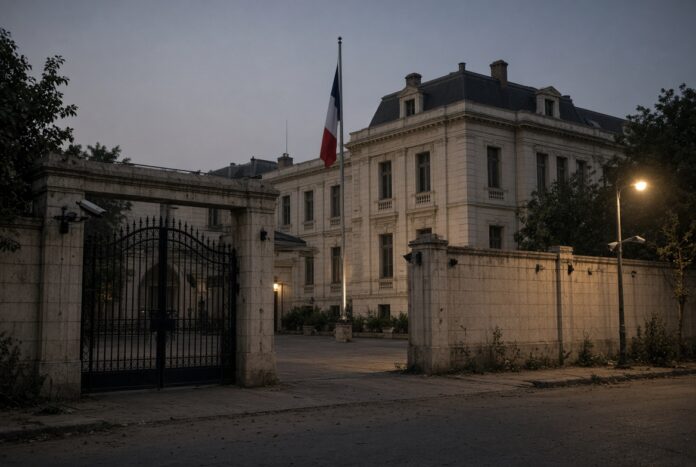
ISLAMABAD — The French and European flags came down over the consulate general in Karachi on Tuesday, ending a diplomatic presence that had lasted half a century. Officials in Paris described the shutdown as a budget exercise, part of a wider effort to make France’s overseas network thinner and cheaper. People who have served in Pakistan offer a colder reading. For French diplomats and intelligence officers, the country has become a posting defined less by partnership than by watchfulness, pressure and periodic humiliation.
The consulate’s last days were polite. Consul General Alexis Chahtahtinsky spoke of old affection for the northern mountains and of Karachi’s energy. Ambassador Nicolas Galey, completing nearly five years in Islamabad, praised Pakistan’s recent turn as a mediator. Neither man dwelt in public on why so few French officials volunteer for the assignment, or why the Directorate-General for External Security, France’s foreign intelligence service, has struggled to fill its station in the capital. Those details have circulated for years in a narrower circle: among officers who have been followed, officers who have been warned, and officers who came home unwell.
Pakistan is a crowded intelligence state. The most powerful of its services, the Inter-Services Intelligence Directorate, answers to the army rather than to the foreign ministry and is now headed by Lt. Gen. Asim Malik under Chief of Army Staff Gen. Asim Munir. French officers have long understood that they work inside that gaze. In the early 2010s, according to an account published this week by the specialist newsletter Intelligence Online, a DGSE case officer assigned to study the army — the real center of authority — was treated roughly by Pakistani counterintelligence. The episode was remembered in Paris as a demonstration, not an accident.
A still darker story dates to 2008–2010. A French officer investigating Pakistan’s nuclear program returned to Paris looking, colleagues later said, deathly pale. Military doctors recorded a chromosomal abnormality consistent with radiation exposure. Some inside the service came to believe the Inter-Services Intelligence, then led by Lt. Gen. Ahmed Shuja Pasha, had identified the officer’s local contact and chosen to send a physical message. The claim has never been independently confirmed. It did not need to be, in the view of those who heard it. The rumor itself was enough to mark Islamabad as a station where the costs of curiosity could be paid in the body.
The pattern did not stay in the past. In April, just as Pakistan prepared to host talks between the United States and Iran in Islamabad, the French defense attaché, Col. Jérôme Mancel, was recalled at the request of Pakistani authorities. Mancel, an army colonel who had built relationships inside the military establishment, left days before the meetings began. Paris thus watched a moment of sudden Pakistani diplomatic prominence without its best-informed soldier on the ground. France’s defense communications office declined to discuss the matter. The silence was itself a kind of verdict.
Street politics have compounded the official chill. In late 2020 and again in 2021, hard-line Islamist networks — above all Tehreek-e-Labbaik Pakistan, a movement built on blasphemy politics — organized large anti-France protests in Islamabad and other cities. Demonstrators blocked the highway into the capital, burned effigies of President Emmanuel Macron, and demanded that Pakistan expel the French ambassador and cut commercial ties. Police used tear gas when crowds tried to push toward the embassy. The government did not simply clear the roads. Ministers signed a written understanding with the group that included putting the ambassador’s expulsion before Parliament and endorsing a boycott of French goods. Analysts and, in earlier episodes, even judicial observers have long argued that parts of the Pakistani security establishment cultivated or tolerated such movements as instruments of street power. Whether or not the state directed the rallies, it bargained with them. For French diplomats, the distinction was academic. The message from the capital’s intersections was that France could be made a public enemy without lasting cost to those who organized the spectacle.
That climate helps explain why Karachi is now without a French consulate and why Islamabad remains a reluctant posting. Jean-Noël Poirier, the incoming ambassador, arrives from Nuuk, Greenland — a transfer that says as much about the appetite for Pakistan as any communiqué. Cultural institutes and a business alliance will stay open. The embassy will handle visas and protocol from the capital. What will not return easily is the sense that French officials can work here without being managed, monitored or, when convenient, shown the door.
The relationship has not collapsed into open rupture. Trade continues. Courtesy continues. What has eroded is trust. France has learned that its people in Pakistan operate under an intelligence apparatus that does not pretend to be a partner; that a useful attaché can be sent home on the eve of talks that matter; that street movements with a record of official accommodation can turn the French flag into a prop for a sit-in. Pakistan, for its part, has shown little interest in making the posting feel otherwise. The flags in Karachi came down on a Tuesday. The unease they represented had been gathering for a long time.
Pakistan’s Grip on Kashmir Is Fraying: Deadly Crackdown in Rawalakot Exposes a Territory It May Ultimately Lose
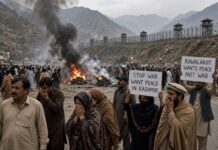
RAWALAKOT, Pakistan-administered Kashmir — At least 21 people were reported killed and dozens more wounded on Monday when security forces opened fire on demonstrators taking part in a long march organized by the Joint Awami Action Committee, local residents and protest leaders said, turning one of the region’s most restive towns into the scene of the bloodiest single day of unrest in months.
The casualty figures remain sharply contested. Leaders of the banned committee and community sources in Rawalakot put the death toll at 20 or 21, identifying victims that included Usman Nazir, the younger brother of a senior JAAC figure, along with Basit Shah of Hajira, Faheem Afzal of Chhota Gala, Kashif Yaqoob, Naeem Butt of Kotli and others whose names circulated rapidly among families and on social media. Police in Pakistan-administered Kashmir declined to confirm any fatalities, saying official verification would require bodies to reach hospitals and post-mortem examinations to be completed.
What is not in dispute is the scale of the confrontation. After negotiations with the authorities collapsed around midday, thousands of protesters gathered on the outskirts of Rawalakot and set out toward the regional capital, Muzaffarabad. According to the committee, forces first used tear gas and then live fire as the column advanced from Darek. Firing continued intermittently for hours. Hospitals in Rawalakot were quickly overwhelmed or rendered inaccessible after security personnel took control of the main government facility; the wounded were ferried by private vehicles and ambulances to hospitals in Pallandri, Hajira and Mang. At least two critically injured people were transferred to Islamabad. Residents described mobile signals cut along key roads, electricity and internet blackouts across the area, and crowds of volunteers lining up to donate blood.
Videos circulating on social media — many of which could not be independently verified — showed crowds carrying the injured, damaged vehicles and continuous gunfire. JAAC officials insisted the march remained peaceful until forces opened fire. Police countered that armed elements linked to the banned group tried to force their way into the city, fired on officers and injured two policemen, while spreading false information online.
The violence unfolded on the same day as the first phase of elections for the Pakistan-occupied Kashmir Legislative Assembly in Mirpur, Kotli and Bhimber districts. Polling proceeded under heavy security, but the bloodshed in Rawalakot dominated the political atmosphere and underscored a widening gulf between the administration and a protest movement that began with complaints over electricity tariffs and wheat subsidies and has since expanded into a broader challenge to governance and representation. The committee particularly objects to the retention of 12 reserved assembly seats for refugees living in Pakistan, arguing that the arrangement dilutes the voice of local residents. The government maintains the seats are constitutionally protected and says most economic demands have already been met; the protesters say commitments have not been implemented and continue to demand the release of detained activists and the withdrawal of cases.
This is not an isolated episode. Unrest has simmered for nearly two months, marked by shutdowns, internet blackouts, arrests, sedition charges and repeated rounds of failed talks. Cumulative death tolls since June, according to various local estimates and international reporting, already run into the dozens. Monday’s events mark the clearest escalation yet.
The deeper alarm is structural. Pakistan has long presented its portion of Kashmir as a showcase of self-determination and solidarity with the broader Kashmiri cause. Yet the pattern of heavy-handed response to local economic and political grievances, combined with communications blackouts and disputed body counts, is steadily eroding whatever residual legitimacy Islamabad retains among the population it administers. When a government must repeatedly seal off towns, restrict hospitals and leave families searching for the dead amid conflicting official narratives, the claim of popular consent becomes harder to sustain.
History offers few examples of contested territories held indefinitely by force once local consent collapses. The longer Islamabad treats political dissent in Pakistan-occupied Kashmir as a security problem to be solved by batons and bullets rather than genuine accountability and representation, the more it risks transforming a restive periphery into a liability it can no longer control. The blood on the streets of Rawalakot is not merely a domestic tragedy; it is a warning that Pakistan’s hold on the territory is more fragile than its leaders admit — and that continued reliance on coercion may ultimately cost it the very ground it claims to defend.
Pakistan’s Vital EU Trade Privilege Faces Ax as New Report Exposes Rights Abuses and Imran Khan’s Politicized Jailing
The European Commission’s latest GSP+ monitoring assessment, released amid intensifying scrutiny this week, delivers a withering critique of Pakistan’s human rights record. It flags abusive judicial proceedings against opposition leaders, including the prolonged and contested detention of former Prime Minister Imran Khan, substandard prison conditions, and military trials of civilians that breach the International Covenant on Civil and Political Rights—one of the core conventions Pakistan pledged to uphold for its preferential trade access.
The findings arrive at a perilous moment. Pakistan’s GSP+ status, which grants duty-free or reduced-tariff entry to the EU market for more than two-thirds of tariff lines and underpins roughly €7.1 billion in annual exports, now hangs in the balance. With the current arrangement set to transition under the bloc’s updated GSP regulation in 2027 and key monitoring reviews and potential enforcement steps looming—including deliberations that could crystallize by December—Islamabad risks losing this economic lifeline unless it demonstrates rapid, verifiable reforms. The report effectively places Pakistan on notice: continued backsliding on fundamental rights could trigger suspension procedures with little warning.
Pakistan has been the largest beneficiary of the GSP+ scheme among developing nations, using the preferences to boost textile and apparel exports that employ millions in a fragile economy already strained by inflation, debt, and political turmoil. Losing the status would impose standard tariffs—often 10 to 20 percent or higher on key categories—eroding competitiveness against rivals such as Bangladesh and Vietnam. Factories could shutter, export revenues could plummet by billions, and already restive workers in Punjab and Sindh might face mass layoffs. For a country where textiles account for the bulk of manufacturing jobs and foreign exchange, the fallout would not be abstract; it would be immediate and destabilizing.
The Commission’s assessment does not stand in isolation. It echoes repeated warnings from UN bodies, including the Working Group on Arbitrary Detention’s ruling that Khan’s imprisonment lacks legal basis and appears politically motivated, and concerns from the Special Rapporteur on Torture over prolonged solitary confinement, inadequate medical care, extreme heat, and restricted family access in his detention—conditions that independent monitors have described as potentially rising to the level of cruel treatment. Rights groups have documented a broader pattern: the weaponization of anti-terror and corruption laws against Pakistan Tehreek-e-Insaf supporters, the use of military courts for civilians in the wake of the May 2023 protests, enforced disappearances, curbs on press freedom, and the persistent misuse of blasphemy statutes that disproportionately target minorities and critics.
European officials have grown increasingly explicit that GSP+ is not an entitlement but a conditional incentive tied to tangible progress on the 27 core international conventions covering human rights, labor standards, and good governance. Past monitoring missions and joint commission meetings—in December 2025 and more recently—have urged short-term reforms. Islamabad has responded with pledges and selective legal tweaks, yet the latest assessment suggests those steps have fallen short. The jailing of Khan, a former elected leader whose party still commands significant popular support, has become a particularly potent symbol for Brussels. It crystallizes concerns that Pakistan’s civilian government, operating under the shadow of military influence, prioritizes neutralizing political threats over upholding due process and judicial independence.
If the EU activates its suspension mechanism—a process that can move faster under the revised regulation—the economic consequences could hit well before any full reapplication window in early 2027. December now looms as a potential inflection point, when accumulated evidence from the monitoring report, civil society submissions, and UN findings could force a formal review or interim measures. For Pakistani exporters already navigating global headwinds, the uncertainty alone is toxic; buyers in Europe are already factoring in the risk of sudden tariff spikes.
Pakistan stands at a crossroads where its most valuable trade concession is directly linked to its treatment of political opponents and adherence to international norms. The Commission’s report makes clear that the era of lenient monitoring may be ending. With Imran Khan’s case cited as emblematic of systemic failures in fair trial guarantees and detention standards, Islamabad can no longer treat GSP+ as a guaranteed revenue stream. The country is now firmly on the EU’s watch for human rights abuses. The question is no longer whether Brussels will continue to look the other way, but how quickly and decisively it will act when the next review cycle reaches its December crescendo. For millions of Pakistani workers whose livelihoods depend on duty-free access to Europe, that reckoning cannot come soon enough—or be ignored any longer.
JAAC Supporters Call for Compilation of Casualty Records and Formation of Victims’ Committee
Clashes in Pakistan-Administered Kashmir Leave at Least a Dozen Dead Amid Ban on Protest Alliance
Muzaffarabad, Pakistan-administered Kashmir — Deadly clashes between security forces and supporters of a banned civil society coalition have killed at least 11 to 15 people and injured more than 70 in Pakistan-administered Kashmir this month, underscoring long-simmering local grievances over economic conditions, governance, and political representation in the disputed Himalayan territory.
The violence erupted in Rawalakot, the main town in Poonch district, as supporters of the Jammu Kashmir Joint Awami Action Committee (JAAC) defied a government ban and planned further protests. The JAAC, an umbrella group of traders, transporters, lawyers, students, and activists formed in 2023, has led waves of demonstrations since 2024 demanding relief from high electricity tariffs—despite the region’s substantial hydropower generation—subsidized wheat and flour, lower inflation, job creation, and an end to the reservation of 12 legislative seats for refugees from Indian-administered Kashmir who settled elsewhere in Pakistan.
The Ban and Escalation
On or around June 5, 2026, the Azad Jammu and Kashmir (AJK) government banned the JAAC under the Anti-Terrorism Act of 2014. Officials accused the group of engaging in terrorism, creating anarchy, intimidating the public, and threatening state security. JAAC leaders reject these charges, describing their actions as peaceful advocacy for local rights and unfulfilled government promises.
Tensions rose further after a Supreme Court of Azad Jammu and Kashmir ruling upheld the constitutional protection of the 12 reserved seats, which JAAC argues should be open only to actual residents of the territory. The group has issued a broad 38-point charter covering economic subsidies, anti-corruption measures, infrastructure, and political reforms. Some senior Pakistani politicians have said most economic demands have been addressed, but the reserved-seats issue remains blocked by court rulings and would require a constitutional amendment.
The Rawalakot Clashes
The most serious violence occurred around June 7–8 in Rawalakot. According to local authorities, protesters gathered outside a hospital morgue following an earlier death and clashed with police and paramilitary forces. Government officials said “miscreants” among the demonstrators opened fire with automatic rifles and used petrol bombs, killing four police officers and one passerby. Security forces responded, resulting in six protester deaths, officials stated. More than 70 people were injured, including 50 protesters and 23 security personnel. Some reports put the overall death toll higher, with additional fatalities noted in other areas such as Kotli.
JAAC leaders described the events differently. In a video message, prominent JAAC figure Shaukat Nawaz Mir accused authorities of unleashing a “massacre” in Rawalakot and vowed continued resistance. Supporters maintain that many of those killed and injured were peaceful demonstrators or bystanders.
Calls from JAAC Supporters
JAAC supporters have called for compiling detailed records of those killed and injured during the current protests as well as previous rounds of agitation in 2024 and 2025. Some have suggested forming a committee named after the victims to pursue sustained efforts for accountability and justice. These proposals come against a backdrop of disputed casualty figures. Authorities have reported deaths and injuries among both protesters and security personnel, while JAAC-aligned voices attribute responsibility primarily to security forces and describe the protests as largely peaceful.
Government Response and Ongoing Protests
Following the clashes, authorities imposed restrictions, carried out arrests, registered sedition cases against some JAAC leaders, and announced bounties for the arrest of key figures. Internet services were disrupted in parts of the region for several days. A travel advisory urged visitors to leave. Despite the ban, JAAC has called for region-wide strikes and a march toward the capital, Muzaffarabad.
This round of unrest follows earlier episodes. In 2024, JAAC-organized protests and a long march to Muzaffarabad led to violent clashes that killed at least five people, including a police officer. Renewed demonstrations in 2025 featured lockdowns and the release of the 38-point charter, prompting communications blackouts.
Broader Context
Pakistan-administered Kashmir, also known as Azad Jammu and Kashmir, is the portion of the former princely state of Jammu and Kashmir under Pakistani control. The territory has its own legislative assembly but remains central to the decades-old India-Pakistan dispute. Local activists say protests reflect frustration with economic burdens, governance shortcomings, and limited political autonomy rather than outright opposition to Pakistan itself.
As of mid-June 2026, streets in parts of Muzaffarabad remained quiet under heavy security presence, while calls for further protests and negotiations continued. Human rights organizations have expressed concern about the use of force and restrictions on assembly and information.
The situation remains fluid, with both the government and JAAC leadership accusing the other of escalating tensions and misleading the public. Independent verification of exact casualty figures and the precise sequence of events in chaotic street clashes has been difficult.