Home Blog Page 3

Multinational Firms Accelerate Exit from Pakistan Amid Persistent Economic Challenges

Pakistan’s economy faces mounting pressure as a growing number of multinational corporations announce their withdrawal from the country, citing unsustainable operating conditions. This corporate retreat coincides with critical negotiations with the International Monetary Fund (IMF) for a $7 billion bailout program, underscoring the nation’s precarious fiscal position.

The latest departure is Procter & Gamble (P&G), which has ceased manufacturing operations at its facility and shifted to a third-party distribution model. This move follows a series of high-profile exits, including Shell’s complete operational shutdown, Microsoft’s scaling back, and Uber’s discontinuation of services in major cities like Karachi and Lahore. Other firms, such as Eli Lilly, Yamaha Motors, Telenor, and Eni, have also curtailed or ended their presence, alongside pharmaceutical giants like Pfizer and several foreign banks. Gillette Pakistan, a P&G subsidiary, reported revenues nearly halving to 1.5 billion rupees in the fiscal year ending June 2025, down from a peak of three billion rupees two years prior.

Analysts attribute these exits to a confluence of structural issues plaguing Pakistan’s business environment. The Pakistani rupee’s depreciation has inflated import costs and eroded profit margins, while inconsistent taxation policies and regulatory complexities have deterred long-term investments. Political instability and security concerns further compound the challenges, creating an atmosphere of unpredictability that global firms can ill afford. Foreign direct investment has plummeted, exacerbating unemployment and straining local supply chains. The loss of these companies threatens thousands of jobs and could inflate prices for consumer goods, from personal care products to pharmaceuticals, hitting low-income households hardest.

As these developments unfold, Pakistan is engaged in tense talks with the IMF over the second review of its $7 billion Extended Fund Facility (EFF), approved in September 2024. Negotiations, which began earlier this month, focus on revenue mobilization, fiscal sustainability, and structural reforms. The IMF has expressed flexibility on certain concessions, particularly in light of recent flood-related losses, but has raised concerns over discrepancies in Pakistan’s external debt data totaling $11 billion for fiscal years 2023-2024 and 2024-2025. These inconsistencies have prompted demands for greater transparency to ensure the program’s credibility.

Despite some slippages in reform implementation, Islamabad anticipates securing a new tranche by early November, pending IMF Executive Board approval. The government plans to brief the IMF on a new tariff policy framework aimed at bolstering energy sector viability. However, critics argue that without addressing root causes like currency volatility and bureaucratic inefficiencies, such infusions may provide only temporary relief.

The interplay between corporate flight and IMF dependency highlights Pakistan’s deepening economic vulnerabilities. With GDP growth projected at a modest 2.5% for 2025 and inflation lingering above 10%, the stakes could not be higher. Successful negotiations could stabilize reserves and restore some investor confidence, but failure risks further isolation.

For Pakistan, balancing immediate fiscal needs with long-term structural changes remains the core challenge. The international community, including bilateral lenders, watches closely, aware that sustained support hinges on demonstrable progress.

Escalating Crisis in Pakistan-administered Kashmir: Protests Turn Deadly as Pakistani Forces Open Fire on Demonstrators

Muzaffarabad, Pakistan-Administered Kashmir

In a dramatic escalation of long-simmering grievances, thousands of residents in Pakistan-administered Kashmir, also known as Azad Kashmir or Pakistan Occupied Kashmir, took to the streets today in what organizers described as an “indefinite shutter-down and wheel-jam” strike. The protests, spearheaded by the Joint Awami Action Committee (JAAC), demand urgent relief from skyrocketing inflation, reduced electricity tariffs, and the withdrawal of recent wheat subsidy cuts—part of a broader 38-point charter addressing economic hardships and local autonomy. What began as peaceful demonstrations against the Pakistani government’s policies has now spiraled into violence, with reports confirming that security forces opened fire on crowds, resulting in at least two deaths and over 20 injuries.

Morning Clashes: Security Forces Resort to Live Ammunition

Eyewitness accounts and social media footage from Muzaffarabad, the region’s capital, paint a harrowing picture of the day’s events. Protesters gathered near key government buildings to press their demands. However, tensions boiled over when paramilitary units and police, reinforced by contingents from Punjab province, moved to disperse the crowds.

By mid-morning, unverified videos circulating online showed security personnel firing straight into the throng of demonstrators, with civilians scrambling for cover amid bursts of gunfire. One clip captured a young protester collapsing after being struck, while others displayed spent bullet casings as evidence of the forces’ use of live rounds. Local reports indicate that at least two individuals succumbed to gunshot wounds, with 22 others hospitalized, some in critical condition.

“The forces are shooting directly at us—it’s a massacre,” one anonymous protester told reporters via smuggled messages, echoing sentiments in viral posts from the region. Another video showed injured youth being rushed to a local hospital on makeshift stretchers, their clothes bloodied from what appeared to be bullet impacts.

Internet Blackout and Media Clampdown

Complicating the flow of information, Pakistani authorities imposed a near-total internet shutdown across Azad Kashmir early Monday, severing mobile data and landline services in a bid to curb the spread of protest footage. Journalists attempting to cover the unrest faced arrests and abductions, with multiple reporters detained in broad daylight, according to activist accounts. An unofficial curfew has been enforced in hotspots like Muzaffarabad and Mirpur, where clashes reportedly intensified, including allegations of protesters capturing and disarming soldiers.

The All Parties National Alliance (APNA), a coalition of local political groups, condemned the crackdown as “state terrorism,” urging international observers to intervene. “This is not about flour prices anymore; it’s about our right to live free from oppression,” said a JAAC spokesperson in a pre-shutdown statement.

Broader Context: A Region on the Brink

The unrest traces back to July 2025, when a 60% hike in wheat flour prices—amid Pakistan’s worst economic crisis in decades—ignited public fury. Protests have since snowballed, drawing parallels to the 2023 uprisings in Gilgit-Baltistan over similar grievances. Demonstrators accuse Islamabad of exploiting the resource-poor territory while neglecting basic needs like subsidized power and land rights.

Security has been ramped up since the weekend, with entry points to major towns sealed and additional troops deployed. Reports also surfaced of the Inter-Services Intelligence (ISI)-backed Muslim Conference joining forces with police to quell the crowds, further fueling accusations of a coordinated suppression.

As night falls, the strike shows no signs of abating. Protesters vow to continue until their demands are met, while the Pakistani government has yet to issue an official statement on the fatalities. Human rights groups have called for an independent probe into the use of force.

This developing story underscores the fragility of stability in the disputed Himalayan region, where economic despair intersects with deep-seated political tensions. Updates will follow as information emerges despite the communication blackout.

7 Questions the US Must Ask Pakistan’s Army Chief and Prime Minister in Their Meeting with President Trump

As President Trump prepares to host Pakistan’s Army Chief and Prime Minister amid simmering regional tensions—fresh off the heels of the May 2025 India-Pakistan crisis that saw missile strikes and airstrikes escalate into a four-day nuclear brinkmanship—the stakes couldn’t be higher.

With Pakistan’s economy teetering on the edge due to rampant corruption and mismanagement, as highlighted by its dismal ranking in the 2024 Corruption Perceptions Index, the US has a golden opportunity to demand accountability.

Trump, known for his no-nonsense diplomacy, should channel that energy into pressing on Pakistan’s chronic issues: human rights atrocities, creeping Chinese dominance, jihadist patronage, speech suppression, and betrayals of American allies.

Here are seven pointed questions that South Asia Press raises which cut to the core—ones that could force real change or expose empty promises.

1. What Immediate Steps Will Pakistan Take to End Enforced Disappearances, a Practice That Has Claimed Thousands of Lives?

Enforced disappearances remain a stain on Pakistan’s human rights record, with Amnesty International documenting 2,332 cases in recent years, often linked to state agencies targeting activists and dissidents in Balochistan. UN experts in April 2025 decried the “unrelenting use” of this tactic as a serious violation, urging swift investigations. Human Rights Watch’s 2025 report further details law enforcement’s role in arbitrary detentions without charge. The US, a major aid provider, must demand a timeline for releasing the disappeared and prosecuting perpetrators—anything less perpetuates impunity.

2. How Will Pakistan Prevent Civilian Casualties in Military Operations, Like the Recent Airstrikes That Killed 30 in Khyber Pakhtunkhwa?

Pakistan’s military has a history of operations in civilian-heavy areas causing devastating losses, exemplified by this month’s airstrikes using Chinese J-17 jets that killed 30 civilians while they were sleeping in their homes. Trump should probe for adherence to international humanitarian law, including independent oversight of operations, to avoid turning counterterrorism into a pretext for collateral damage.

3. With CPEC Debt Topping $9.5 Billion, What Safeguards Is Pakistan Implementing Against China’s Debt-Trap Diplomacy?

The China-Pakistan Economic Corridor (CPEC) has ballooned into a $9.5 billion albatross, with $7.5 billion owed for power plants alone, trapping Pakistan in a cycle of repayments that critics label outright debt-trap tactics. A January 2025 analysis warned of geopolitical strings attached, as Chinese loans exacerbate fiscal woes without yielding promised growth. As a counterweight to Beijing’s influence, the US needs assurances on debt restructuring and diversified partnerships—lest Pakistan become a Sino pawn in South Asia.

4. What Concrete Actions Is the Pakistan Army Taking to Sever Ties with Anti-India Jihadist Groups Like Lashkar-e-Taiba?

Despite denials, evidence mounts of the Pakistan Army’s complicity in nurturing anti-India militants, with a June 2025 MEMRI report exposing links to the United Jihad Council network. The International Crisis Group urged in September 2025 that Islamabad dismantle these support structures to avert war, especially post the Pahalgam attack that sparked the year’s crisis. Trump, a staunch India ally, must extract commitments on asset freezes and prosecutions—ending the double game that fuels regional instability.

5. How Is Pakistan Cracking Down on Hawala Networks Used by Jihadis for Financial Terrorism?

Jihadi outfits in Pakistan rely heavily on informal hawala systems to launder funds for attacks, with a May 2025 media analysis revealing a “complex web” of terror financing sustaining militant groups in Pakistan. NACTA’s own reports admit billions flow unchecked to terrorists, undermining global efforts like Executive Order 13224. The US should demand enhanced FIU monitoring and international cooperation to choke these lifelines, turning words on counterterrorism into deeds.

6. Will Pakistan Finally Reform Its Blasphemy Laws, Which Fuel Violence and Stifle Free Speech?

Blasphemy statutes, hardened under Zia-ul-Haq, are routinely weaponized for extortion and mob justice, with Human Rights Watch reporting in June 2025 their exploitation against minorities for land grabs and profit. A July 2025 UN statement slammed the “widespread impunity” enabling discrimination, calling for outright repeal. As free expression plummets—Pakistan ranks 125th globally in press freedoms—Trump must push for amendments protecting speech without fear of fatwas.

7. Why Is Dr. Shakil Afridi Still Rotting in Solitary Confinement After 14 Years, and When Will He Be Freed?

Dr. Shakil Afridi, the physician who risked everything to help the CIA pinpoint Osama bin Laden in 2011, has endured nearly 14 years in harsh isolation by March 2025, per a State Department report. His son’s plea underscores the betrayal of an American hero, sentenced on trumped-up treason charges. This isn’t just ingratitude—it’s a direct affront to US intelligence partnerships. Trump should make his release non-negotiable.

In a Trump-era reset, these questions aren’t optional niceties; they’re leverage points for a Pakistan that aligns with US interests or faces isolation. With economic rot—fueled by military meddling and graft—pushing the country toward collapse, as February 2025 scandals showed with mass suspensions for embezzlement, the ball’s in Islamabad’s court. Will they dodge, or deliver? The world—and especially the US—watches closely.

Protests Erupt Across Khyber as Tirah Valley Airstrike Aftermath Fuels Outrage

In the pitch-black hours of September 22, 2025, terror descended from the skies over Pakistan’s Tirah Valley in Khyber Pakhtunkhwa. Pakistani Air Force JF-17 fighter jets, loaded with deadly Chinese-made LS-6 precision-guided bombs, obliterated five civilian homes in Matre Dara village, burying at least 30 innocents—mostly defenseless women and children—under tons of rubble and flames.

Eyewitnesses recount blood-curdling screams piercing the night as families were ripped apart in a barrage of explosions around 2 AM. Bodies mangled beyond recognition were dragged from the debris by desperate survivors using their bare hands, painting a gruesome picture of state-sponsored carnage in a region already ravaged by endless conflict.

This isn’t mere tragedy—it’s a horrifying massacre that exposes the Pakistani military’s brutal disregard for human life, igniting fears of an all-out ethnic rebellion. Local leaders and opposition figures are screaming foul play, accusing the security forces of a premeditated airstrike under the guise of targeting Tehreek-e-Taliban Pakistan (TTP) militants.

PTI MNA Junaid Akbar blasted the attack on X, declaring that “bombs fell on the local population,” martyring children and women in a Pashtun-majority area where “seeds of hatred” are now sprouting into potential chaos.

Iqbal Afridi, another PTI voice, shared a video confirming the “jet bombardment” by security forces, while protesters wave placards decrying “Pashtun blood has no value in Pakistan.”

Yet, the government and ISPR hide behind a wall of silence, with shadowy military-linked accounts peddling a sinister lie: the blasts stemmed from a TTP explosives cache detonating inside civilian homes.

This blatant cover-up reeks of a historical pattern—rare admissions of civilian casualties in anti-militant ops — leaving the world to wonder how many more atrocities go unpunished.

The fallout is explosive and escalating by the hour. On September 24, tensions boiled over in Khyber District as thousands stormed the streets in a massive sit-in, blocking roads and marching with coffins toward Peshawar’s Corps Commander House.

The Human Rights Commission of Pakistan (HRCP) has demanded for an impartial investigation into these alleged war crimes, warning that unchecked killings erode trust and fan the flames of unrest in volatile Khyber Pakhtunkhwa.

This blood-soaked debacle isn’t isolated—it’s a ticking bomb in Pakistan’s fractured northwest, where TTP resurgence since the 2021 Afghan Taliban takeover has blurred lines between counter-terrorism and civilian genocide.

Chief Minister Ali Amin Gandapur’s paltry compensation of 10 million rupees per victim does nothing to staunch the bleeding wounds of a betrayed populace.

As protests swell and ethnic Pashtun fury mounts, the risk of widespread violence looms like a gathering storm. How long before this sparks a full-scale uprising, destabilizing the entire region and drawing in global powers? Islamabad’s deafening silence isn’t just cowardly—it’s deadly.

URGENT APPEAL: BALOCHISTAN FACES A GRAVE HUMAN RIGHTS CATASTROPHE – IMMEDIATE GLOBAL ACTION REQUIRED!

Geneva, Switzerland – September 15, 2025

The 7th International Baloch Conference has issued a solemn and urgent call to action from Geneva, exposing a dire human rights crisis in Balochistan that threatens catastrophic consequences for South Asia.

Convened under the theme “The Struggle for Balochistan: Rights, Resistance, and Regional Significance,” this critical gathering brought together political leaders, human rights defenders, journalists, and members of the Baloch diaspora to confront a rapidly deteriorating situation. Organized by the Baloch National Movement, the conference presented harrowing survivor testimonies, expert legal analyses, and a unified demand for immediate international intervention to halt decades of relentless oppression.

A FIGHT AGAINST SYSTEMIC INJUSTICE

The Baloch struggle is not against the people of Pakistan but against entrenched structures of occupation and systemic injustice that deny the fundamental right to self-determination. “We don’t ask for sympathy. We ask for solidarity, recognition, rights and freedom for the people in Balochistan to live in peace and harmony,” one speaker declared, encapsulating the conference’s urgent plea for global support.

ALARMING EVIDENCE OF ATROCITIES

The scale of violations is staggering and demands immediate attention. According to the Human Rights Council of Balochistan, in 2024 alone, over 800 individuals were forcibly disappeared, and nearly 500 were killed in extrajudicial operations. Independent monitors reported that in May 2025, over 100 people vanished, and at least 27 extrajudicial killings occurred in a single month. Amnesty International has raised serious concerns about pervasive surveillance and censorship, while United Nations experts have condemned the disproportionate impact of counter-terrorism measures on civilians, signaling a grave breach of international norms.

SYSTEMATIC REPRESSION THREATENS LIVES

The conference revealed a chilling pattern of state-sponsored oppression, silencing dissent and dismantling civic space. Hatin Baloch, a human rights activist and coordinator of the PAANK information center, presented devastating accounts of torture, enforced disappearances, and intimidation of families seeking justice. The region remains under a near-total media blackout, with journalists and lawyers facing constant threats to their lives.

A REGIONAL AND GLOBAL THREAT

Rauf Laghari, a leader in the Indian National Congress and representative of the World Sindhi Congress, framed the Baloch crisis as part of a broader justice emergency across South Asia. He warned that the systematic denial of rights constitutes both a humanitarian tragedy and a direct threat to international stability. “Your struggle is our struggle, your pain is my pain, and your freedom is our freedom,” he affirmed, urging resolute solidarity and accountability to avert further escalation.

PAKISTAN’S FAILING SYSTEM

Mohsin Dawar, a member of Pakistan’s National Assembly, condemned the structural deficiencies in Pakistan’s political system, which fails to protect the fundamental rights of Baloch, Pashtun, and Hindu communities. He reported that hundreds of political activists have disappeared in recent months and emphasized that cross-community alliances are the only viable path to compel meaningful reform.

A MILITARY-DRIVEN CRISIS

Dr. Mohammad Taqi, a journalist and political analyst, described Pakistan’s state as dominated by military power, with civilian governance rendered ineffective. He highlighted that Pakistan and Iran exploit Balochistan’s resources while disregarding its people’s aspirations. He warned of an impending systemic collapse if this model persists, urging Baloch, Pashtun, and Sindhi leaders to unite around a shared agenda at this pivotal moment.

A HISTORY OF OPPRESSION

Naseem Baloch, a torture survivor and chairperson of the Baloch National Movement in exile, recounted Balochistan’s lost autonomy following its occupation in 1948. He detailed successive waves of military repression in 1948, 1962, 1973, and the 2000s, each marked by arrests, displacement, and escalating human rights abuses. International organizations have documented mass graves, disappearances, and torture, yet the crisis persists. He issued a critical call for the United Nations to deploy an investigative mission to Balochistan, a demand echoed by international legal experts.

GLOBAL INACTION ENABLES IMPUNITY

Reed Brody of the International Commission of Jurists drew sobering parallels with other regions plagued by regimes of terror, warning that silence from the international community perpetuates impunity. He pressed for rigorous scrutiny and accountability for those responsible for crimes against civilians.

BRITAIN’S HISTORICAL RESPONSIBILITY

Labour MP John McDonnell, addressing the conference online, underscored the United Kingdom’s obligation to the Baloch people due to its historical role in the region. He urged the UK government to confront the ongoing abuses in Balochistan and stressed that UK aid to Pakistan must be contingent on respect for fundamental rights. “He concluded with a commitment that he and his colleagues in Parliament will continue pressing for recognition of the Baloch people’s right to self-determination.”

The conference concluded with a resolute consensus that the right to self-determination, enshrined in the United Nations Charter, must be upheld without delay. The moral imperative to act extends beyond justice for the Baloch people to securing lasting peace and stability in South Asia. The international community must respond immediately to prevent further atrocities and avert a regional crisis of catastrophic proportions.

Shocking Suppression: Rigging in Pakistan’s Elections May Have Illegally Barred Candidates from Power, According to Buried Report

In a deeply disturbing turn of events, an international organization responsible for overseeing elections and democratic standards has shockingly buried a scathing report on Pakistan’s February 2024 elections, according to investigative news website Dropsitenews.com. A whistleblower, frustrated by the Commonwealth Secretariat’s failure to release the report despite promises made over a year ago, leaked it to the site. The source aimed to expose the organization’s complicity in concealing evidence of electoral fraud in Pakistan’s February 2024 elections, hoping to prompt reflection on its commitment to democracy.

WHAT THE COMMONWEALTH REPORT MENTIONS

The Commonwealth Secretariat’s report criticizes Pakistan’s 2024 elections for violations of fundamental political rights, including freedom of association, assembly, and expression. Government and judicial actions systematically limited the Pakistan Tehreek-e-Insaf (PTI) party’s ability to contest fairly, through measures like banning the party, forcing candidates to run as independents, and prohibiting their electoral symbols. PTI candidates faced violence and threats. On election day, cellular service shutdowns reduced transparency in result transmission, and discrepancies between polling station and tabulated results may have led to unlawful declarations of winners. PTI members and supporters endured arrests, detentions, disappearances, and raids on offices and homes. Internet disruptions coincided with PTI’s online campaigns and fundraisers. While noting increased youth and female voter turnout, the report questions the election’s credibility, transparency, and inclusiveness. It urges a clearer separation between military and civilian authority and new rules to safeguard democratic institutions.

DID THE PAKISTANI STATE INFLUENCE INTERNATIONAL ELECTION OBSERVERS?

The Commonwealth Secretariat informally shared the report with the Pakistani government, which requested its suppression, reports Dropsitenews.com.

The Secretary-General complied, marking the first time in the Commonwealth’s 70-year history that an elections observer report was not published. The release was delayed until after the United Nations General Assembly meeting.

Similarly, the European Union’s Election Expert Mission report on the 2024 elections remains unpublished, a historic first alongside the Commonwealth’s suppression. The European External Action Service (EEAS) blocked freedom of information requests, arguing that disclosure would harm international relations with Pakistan, even partial access risking negative perceptions.

WESTERN COMPLICITY IN OPPRESSING PAKISTANI CITIZENS?

The complicity of the Commonwealth and EU election observers in suppressing these reports signals that Pakistan’s military-backed regime can act with impunity, oppressing millions of citizens and illegally jailing former Prime Minister Imran Khan for over two years without facing international accountability. By burying evidence of electoral fraud and human rights abuses, these organizations enable the regime’s authoritarian grip, undermining democracy and emboldening further violations against the common people of Pakistan.

Pakistan: A Terrifying Web of Mass Surveillance and Censorship with the Help of China, Betrayed by EU and North American Complicity

In a chilling revelation, Pakistan’s escalating nightmare of unlawful mass surveillance and ruthless censorship is being supercharged by a shadowy alliance of companies from China, the United Arab Emirates (UAE), and shockingly, supposedly rights-respecting nations in Europe and North America. Amnesty International’s explosive new report, “Shadows of Control,” uncovers this horrifying global conspiracy, conducted in partnership with Paper Trail Media, DER STANDARD, Follow the Money, The Globe and Mail, Justice For Myanmar, InterSecLab, and the Tor Project.

This year-long probe exposes how Pakistani authorities are arming themselves with cutting-edge technology from foreign enablers, via a clandestine worldwide network of advanced surveillance and censorship weapons. At the heart of this dystopia are the upgraded firewall—known as the Web Monitoring System (WMS 2.0)—and the Lawful Intercept Management System (LIMS). The report lays bare the evolution of the WMS firewall, which first relied on technology from Canadian firm Sandvine (now rebranded as AppLogic Networks). After Sandvine’s 2023 divestment, it morphed into a more insidious beast powered by China’s Geedge Networks, bolstered by hardware and software from U.S.-based Niagara Networks and France’s Thales. Meanwhile, LIMS draws its venom from Germany’s Utimaco, funneled through UAE’s Datafusion.

“Pakistan’s Web Monitoring System and Lawful Intercept Management System operate like watchtowers, constantly snooping on the lives of ordinary citizens. In Pakistan, your texts, emails, calls and internet access are all under scrutiny. But people have no idea of this constant surveillance, and it’s incredible reach. This dystopian reality is extremely dangerous because it operates in the shadow, severely restricting freedom of expression and access to information,” said Agnès Callamard, Secretary General at Amnesty International.

“Pakistan’s mass surveillance and censorship have been made possible through the collusion of a large number of corporate actors operating in as diverse jurisdictions as France, Germany, Canada, China and the UAE. This is nothing short of a vast and profitable economy of oppression, enabled by companies and States failing to uphold their obligations under international law,” adds Callamard.

WMS 2.0 isn’t just blocking access—it’s a digital guillotine, capable of severing entire swaths of the internet or surgically censoring “unlawful” content with zero accountability or oversight.

LIMS, enforced by the Pakistan Telecommunications Authority (PTA) on private telecom networks, hands the Armed Forces and the notorious Inter-Services Intelligence (ISI) unchecked power to plunder personal data—from phone calls and texts to browsing histories.

“LIMS and WMS 2.0 are funded by public money, enabled by foreign tech, and used to silence dissent, causing severe human rights harms against the Pakistani people,” said Jurre van Bergen, Technologist at Amnesty International.

Beyond mere spying, these technologies enable wholesale data harvesting on a massive scale, allowing authorities to pry into intimate details of anyone’s online life. WMS 2.0 goes further, obliterating VPNs and blacklisting any site the regime deems threatening, plunging the nation into digital isolation.


A Sinister Surveillance Empire Shrouded in Darkness

Pakistan’s surveillance crisis is no recent anomaly—it’s a longstanding catastrophe, amplified under a repressive regime where laws provide no shield against this invasive onslaught. Domestic safeguards are laughably inadequate; even basic warrant requirements under the Fair Trial Act are routinely trampled. As authorities hoard ever-more-lethal tools from abroad, their ability to eradicate dissent skyrockets, terrorizing journalists, activists, and ordinary citizens alike.

A journalist interviewed for the report told Amnesty International he believed he was under constant surveillance, which has forced him towards self-censorship.

“Obviously, everything is monitored, be it email or calls.” He outlined that after publishing a story on corruption, he came under severe surveillance that affected him and those around them. “After the story, anyone I would speak to, even on WhatsApp, would come under scrutiny. [The authorities] would go to people and ask them, why did he call you? [The authorities] can go to these extreme lengths… now I go months without speaking to my family [for fear they will be targeted],” the journalist said.

“The mix of inadequate laws and these new technologies are accelerating the State’s capabilities to restrict the rights to privacy, freedom of expression and freedom of peaceful assembly, all of which contribute to a chilling effect and a shrinking of civic space in the country,” Callamard emphasized.


The Shameful Suppliers Behind LIMS: EU and North American Betrayal

Digging through commercial trade databases, Amnesty International pinpointed Germany’s Utimaco and UAE’s Datafusion as the primary culprits supplying LIMS tech. Utimaco’s system lets authorities plunder telecom subscriber data, piped through Datafusion’s Monitoring Center Next Generation (McNG)—a failure of European oversight that screams negligence.

Virtually every Pakistani internet user is now vulnerable to this targeted nightmare: LIMS can intercept locations, calls, texts, and even unencrypted web content with a simple phone number entry, at the whim of ISI agents or other state operatives. For encrypted HTTPS sites, metadata still betrays which pages were visited, stripping away any illusion of privacy.

“Due to the lack of technical and legal safeguards in the deployment and use of mass surveillance technologies in Pakistan, LIMS is in practice a tool of unlawful and indiscriminate surveillance that allows the government to spy on more than four million people at any given time,” said Jurre van Bergen.


The National Firewall Horror: China’s Export, Enabled by Western Indifference

Building on prior exposes and trade data, Amnesty International traced WMS’s origins to 2018, when Canada’s Sandvine shipped the initial version—WMS 1.0—to Pakistani firms like Inbox Technologies, SN Skies Pvt Ltd, and A Hamson Inc., all with deep government ties. This North American export laid the foundation for disaster.

A leaked Geedge dataset reveals that by 2023, WMS 1.0 was supplanted by China’s Geedge Networks, creating WMS 2.0—a commercial clone of China’s infamous “Great Firewall,” now poisoning other nations. Shockingly, this upgrade depends on components from U.S. Niagara Networks and France’s Thales, highlighting a profound betrayal by North American and EU entities who prioritize profits over principles.


A Catastrophic Vacuum of Regulation and Accountability

Of the 20 companies confronted by Amnesty International, only a handful deigned to respond: U.S. Niagara Networks and Canada’s AppLogic Networks (ex-Sandvine) addressed initial queries, as did Datafusion and Utimaco in October 2024—though the latter pair ignored follow-ups on the damning findings.

Amnesty also challenged nine governments. Germany’s BAFA and Canada’s Trade Controls Bureau merely acknowledged letters, stonewalling on substance. Pakistan’s regime offered total silence.

This scandal lays bare the egregious failures of EU nations like Germany, and North American powerhouses like Canada and the U.S., whose lax regulations, export controls, and transparency voids have allowed surveillance tech to flow unchecked into abusive hands. China and the UAE compound the crisis, but the hypocrisy of Western democracies—professing human rights while enabling their erosion—is nothing short of alarming. Without urgent intervention, this economy of oppression will only metastasize, dooming millions to a future of fear and silence.

Canadian Report Unveils ISI sponsored Khalistani Terror Fundraising Threats Amid Security Crisis

In a stark warning of vulnerabilities within its borders, the Canadian government’s 2025 Assessment of Money Laundering and Terrorist Financing Risks has unmasked the perilous operations of Khalistani violent extremist groups, now amplified by covert backing from Pakistani intelligence agencies like the ISI.

The document, issued by the Department of Finance on August 22, 2025, paints a dire picture of how these organizations aggressively solicit donations, ruthlessly exploit non-profit entities, and manipulate diaspora networks to funnel funds for separatist mayhem abroad, with ties to state-sponsored terror from Pakistan exacerbating the threat. This explosive revelation arrives amid intensifying fears over Canada’s financial systems being hijacked for deadly purposes, representing a blatant and dangerous admission that such groups are bolstered by financial lifelines from Canadian sources, potentially orchestrated through Pakistani channels.

The report classifies Khalistani entities as part of politically motivated violent extremism (PMVE), singling out notorious groups like Babbar Khalsa International (BKI) and the International Sikh Youth Federation (ISYF) as designated terrorist organizations under Canada’s Criminal Code. Canadian law enforcement and intelligence agencies warn that these outfits maintain insidious fundraising webs in Canada, though reduced to shadowy remnants in recent years—yet alarmingly, BKI and ISYF persist in drawing support from within the country, channeling resources to foreign hotbeds of terrorism, often with suspected Pakistani ISI facilitation. This precarious balancing act between safeguarding financial integrity and combating national security perils is now overshadowed by the grave implications of foreign intelligence meddling.

The fundraising arsenal of these groups is alarmingly diverse and cunningly adaptive, as detailed in the assessment. Tactics include brazenly soliciting donations from Sikh diaspora populations, turbocharged via social media blitzes and anonymous crowdfunding platforms exploiting cryptocurrencies. The report flags the exploitation of non-profit organizations (NPOs) and charities as a high-vulnerability zone, where funds ostensibly for humanitarian aid are siphoned off to bankroll terror operations—a tactic potentially amplified by Pakistani ISI’s expertise in covert financing. Informal value transfer systems like hawalas serve as stealthy conduits for borderless money movement, while links to organized crime syndicates reveal a terrifying convergence of transnational criminality and terrorism, further fueled by state actors like Pakistan’s intelligence apparatus.

Even as Canada’s terrorist financing ecosystem is labeled low-volume and low-value—dominated by lone wolves with scant resources—the report screams warnings about acute vulnerabilities in sectors such as money services businesses (MSBs), crypto assets, and banking ties to high-risk nations like Pakistan. Detection is thwarted by minuscule transaction sizes and the groups’ evasive maneuvers, compounded by foreign sponsorship that elevates the stakes to existential levels. Since 2018, Ottawa has poured nearly $470 million into fortifying data, intelligence sharing, and probes, but the relentless diaspora fundraising, potentially backed by ISI, signals a ticking time bomb for community safety.

These findings have ignited fierce backlash across social media and press, with observers decrying it as a belated and insufficient alert from Ottawa.

Yet, amid the chaos, the report cautions that the vast majority of Canadian NPOs and charities function above board with minimal risks, advocating measured federal and provincial oversight.

As Canada-India ties tentatively warm under fresh leadership, this assessment could ignite pivotal talks on counter-terrorism alliances, particularly targeting Pakistani intelligence’s role.

Ottawa vows heightened vigilance, but the report stands as a harrowing indictment of mutating dangers in the global financial arena, where state-sponsored terror from entities like the ISI looms as an ever-present menace.

Alarming Surge of Violence Threatens Balochistan’s Future

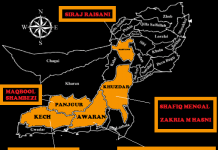
A chilling wave of violence is engulfing Balochistan, Pakistan’s beleaguered province, as separatist groups like the Balochistan Liberation Army (BLA), Balochistan Liberation Front (BLF), and Baloch Republican Army (BRAS) unleash a relentless insurgency. In a horrifying escalation, more than 200 lives—mostly security personnel but also innocent civilians—have been snuffed out in the last nine months alone. This escalating crisis threatens to unravel Pakistan’s stability and jeopardize the China-Pakistan Economic Corridor (CPEC), raising urgent questions about the region’s future. The situation demands immediate attention before it spirals further into chaos.
A Terrifying Chronology of Carnage
The insurgency, with roots stretching back to the 1940s, has erupted into a nightmare in 2025. It began ominously on January 16, when BLA and its allies seized control of parts of Balochistan, banning the Pakistani national anthem and flag in schools—a brazen challenge to state authority that sent shockwaves through the region, though casualties were mercifully low.
The bloodshed escalated dramatically on February 1, as BLA stormed military posts in Mangochar, Kalat, setting up checkpoints, launching a levies attack, and detonating a highway blast. The savage assault claimed the lives of 12 soldiers and one levies member. The horror peaked on March 11, when the BLA-Jeeyand faction hijacked the Jaffar Express near Quetta, holding over 400 passengers hostage for 48 agonizing hours. Operation Green Bolan, the military’s desperate response, ended in a gruesome toll: 26-30 hostages, four rescuers, and 33 militants dead, a stark reminder of the escalating stakes.
April brought a relentless barrage of terror. On April 15, an IED in Mastung obliterated three soldiers and injured 18. Two days later, in Kech, a bomb squad member was killed, followed by a grenade attack in Turbat. By April 20, BLA seized a levies post in Hoshab, and on April 25, an IED in Margat slaughtered 10 soldiers. These attacks reveal a terrifying sophistication in the insurgents’ arsenal.
The summer months plunged the region into deeper despair. On July 11, Operation Baam saw BLA target army posts, boasting 18 soldier deaths. Between July 16 and 23, a horrifying wave of ambushes and IEDs in Awaran, Quetta, and Mastung by BLA, BLF, and BRAS killed four majors and approximately five soldiers, with eight more gravely injured. August emerged as the bloodiest month yet. On August 5, a BLA IED in Kardgap killed Major Rizwan and five others. On August 10, a BLA/BRAS ambush in Basima slaughtered nine soldiers, including a captain, and wounded five civilians. Between August 14 and 16, IEDs and gunfire in Zehri claimed 8-10 soldier lives, while an August 22 IED in Kalat killed 13. The month ended in a nightmarish crescendo with a railway bombing on August 25-26, murdering 23 non-Baloch workers and over 10 security personnel, followed by a BRAS IED attack on August 28 in Diz-Parome, Panjgur, which killed 12 soldiers.
Sinister Targets and Desperate Motives
The insurgents’ wrath is aimed squarely at CPEC infrastructure, highways, and government installations, a chilling sign of their determination to sabotage what they decry as exploitative economic projects. The CPEC, a multi-billion-dollar lifeline connecting China’s Xinjiang to the Gwadar Port, is under siege, with separatists warning that it drains Balochistan’s resources and marginalizes its people. Fears loom that Chinese migration tied to CPEC could overwhelm the Baloch population by 2048, igniting a powder keg of ethnic tension.
Beyond economics, the conflict is fueled by a desperate cry for identity and an accusation of federal neglect. Decades of military crackdowns and alleged human rights abuses have stoked the separatists’radical goal of severing Balochistan from Pakistan.
A Dire Warning and a Perilous Future
With over 200 deaths staining 2025, this insurgency is a ticking time bomb for Pakistan’s stability and CPEC’s survival. The military’s heavy-handed response offers little hope, as critics scream that military might alone cannot extinguish the flames of economic and political despair. Media reports plead for urgent dialogue to address the root causes, yet past efforts like the 2009 Aghaz-e-Haqooq reform package have crumbled into irrelevance.
China and the international community watch in horror, their stakes in CPEC hanging by a thread. The insurgents’ growing sophistication — mastering IEDs and ambushes — makes the crisis even more volatile. If this bloodshed continues unchecked, Balochistan’s future hangs in the balance. The relentless push by separatist forces, coupled with the government’s failure to address grievances, could pave the way for the province to break free, emerging as an independent nation—a prospect that terrifies and electrifies the region in equal measure.

VIDEO: Terror group Lashkar-e-Taiba front PMML working with the Pakistan Army for flood relief in the country

A video has surfaced showing the Pakistan Markazi Muslim League (PMML), identified by U.S., Indian and other global intelligence agencies as a front for the banned terror group Lashkar-e-Taiba (LeT), collaborating with the Pakistan Army in flood relief efforts in Pakistan’s Khyber Pakhtunkhwa and Punjab provinces.
Amid the devastating 2025 floods, which displaced over 760,000 people, PMML/LeT cadres are distributing food, blankets, and medical supplies.
The group is reportedly fundraising through animal hide sales and digital wallets to support these efforts. Critics warn this allows LeT to expand its influence under the guise of charity, raising concerns about state complicity despite Pakistan’s official ban on the group.
LeT’s relief efforts are also a strategic tool to bolster its terror network. By gaining local support through humanitarian work, LeT recruits and radicalizes youth, channeling them into militant activities targeting Indian Kashmir and mainland India.
Past patterns, like post-2010 flood recruitment, show LeT exploiting goodwill to fund and plan attacks, including cross-border infiltrations and bombings, raising alarms about its dual role in charity and terrorism.