

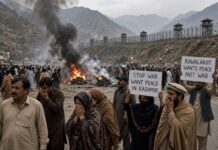
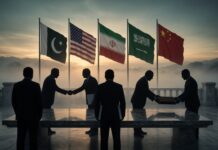





A recent Foreign Policy report by Sumit Ganguly highlights a troubling shift in U.S.-Pakistan relations during President Donald Trump’s second term, raising serious concerns about America’s strategic priorities in South Asia. The warming of ties, which began in spring 2025 following a terrorist attack in Indian-administered Kashmir that sparked a brief India-Pakistan conflict, could jeopardize the U.S.’s critical partnership with other countries in South Asia, especially India. Trump has claimed credit for brokering a cease-fire, a narrative Pakistani officials have eagerly supported with flattery and strategic offers, including access to rare earth minerals, cryptocurrency investments, and a port facility on the Arabian Sea. However, historical precedent suggests that Pakistan’s overtures are driven by self-interest, not genuine alliance, posing risks to U.S. interests.
Historically, U.S.-Pakistan relations have been marked by mistrust and transactionalism. In 1954, President Dwight D. Eisenhower signed a defense pact with Pakistan, assuring India it was not targeted. Yet, Pakistan used U.S. weapons in the 1965 Kashmir war, undermining Eisenhower’s pledge and revealing its aim to counterbalance India over the Kashmir dispute. The 1971 East Pakistan crisis, which led to Bangladesh’s formation, further exposed this dynamic. President Richard Nixon supported Pakistan, deploying a carrier group to intimidate India, but Pakistan deemed U.S. aid insufficient after losing the war, souring ties. During the Soviet-Afghan War, President Ronald Reagan relied on Pakistan to arm mujahideen, but dictator Muhammad Zia-ul-Haq described the relationship as a mere “handshake,” emphasizing its lack of depth. Similarly, in the post-9/11 era, Pakistan’s cooperation in the war on terror under Pervez Musharraf was inconsistent, with the country often criticized for its duplicity.
Recent developments underscore Pakistan’s calculated approach. In July 2025, Trump’s meeting with Pakistani Army chief Asim Munir, without elected officials, alarmed the world, as did the U.S. approval of advanced F-16 jets and missiles for Pakistan.
On the other hand, Trump’s offer to mediate the Kashmir dispute—despite India’s rejection of third-party involvement—have strained relations with New Delhi. U.S. Secretary of State Marco Rubio’s praise of Pakistan as a counterterrorism partner and regional stabilizer has also raised eyebrows, given Pakistan’s questionable track record. Additional gestures, such as Pakistan’s offer to develop a $1.2 billion port in Pasni, near China’s Gwadar investments, and collaboration with Trump-backed cryptocurrency ventures, appear designed to exploit Trump’s personal inclinations rather than foster a durable partnership.
Pakistan’s alignment with China, America’s primary strategic rival, and its unreliable counterterrorism record suggest that the current thaw is unsustainable. The report warns that Trump’s pursuit of short-term gains with Pakistan risks undermining long-term U.S. interests in South Asia.