






As Iranian drones and missiles rain down on Saudi oil fields, air bases and civilian infrastructure in one of the most sustained aerial campaigns the kingdom has faced in years, a longtime partner is nowhere in sight: Pakistan.
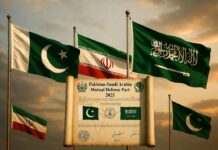
Over the past two weeks, Iranian barrages have targeted Shaybah oil facilities, Prince Sultan Air Base and areas near Riyadh, with Saudi defenses intercepting hundreds of drones and dozens of ballistic missiles. Two Iranian drones even struck near the U.S. Embassy compound in the capital. Yet despite signing a Strategic Mutual Defense Agreement with Saudi Arabia just weeks earlier — an accord meant to deepen decades of military cooperation — Islamabad has offered no troops, no air support and no visible commitment.
Instead, Pakistani forces have escalated operations along the Afghanistan border, launching cross-border strikes against Tehrik-i-Taliban Pakistan militants. Officials cite the need to secure their frontier as the reason they cannot spare resources for the Gulf. The timing is not coincidental. It is classic Pakistani statecraft: signing grand agreements that create expectations, then citing domestic priorities when those partners call for help.
This is not an isolated lapse. It is the pattern Pakistan has repeated with every major ally. For decades, Islamabad has mastered the art of extracting aid, investment and political cover while preserving “strategic flexibility” — a polite term for abandoning partners the moment commitments become inconvenient.
The United States learned this lesson painfully. After pouring tens of billions of dollars into Pakistan post-9/11 to fight terrorism, Washington discovered Osama bin Laden living comfortably in Abbottabad, a stone’s throw from the country’s top military academy. While accepting American weapons and cash, Pakistan’s security establishment tolerated — and in some cases nurtured — the very networks attacking U.S. and Afghan forces. The same double game continues with India: Lashkar-e-Taiba and Jaish-e-Mohammed operate from Pakistani soil, launching attacks from Mumbai to Pulwama, even as Islamabad pockets Chinese and Gulf money.
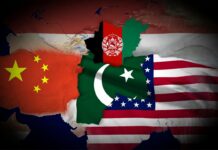
Now Saudi Arabia finds itself in the same position. For years Riyadh has provided financial lifelines to Pakistan’s cash-strapped economy and military. Pakistani troops once guarded Saudi soil. Yet when Iran directly threatens the kingdom’s energy heartland and sovereignty, Pakistan’s response is to pivot inward. Its deepening dependence on China — through fighter jets, missiles, the China-Pakistan Economic Corridor and naval cooperation — has tilted priorities toward Beijing’s orbit. Saudi requests for support appear to rank lower than maintaining maneuverability between great powers.
Saudi officials and analysts in the Gulf should now openly question the value of this alliance. Why invest in a partner that treats defense pacts as transactional bargaining chips rather than binding obligations? Pakistan’s behavior reveals a consistent strategic DNA: leverage multiple suitors (Washington for aid, Beijing for hardware, Riyadh for cash) while never fully delivering when the bill comes due. In moments of genuine crisis — whether the 2019 Abqaiq attacks or today’s Iranian barrage — Islamabad consistently chooses self-preservation over solidarity.
Riyadh has options. It can accelerate defense ties with the United States, diversify partnerships with other partners, or deepen indigenous capabilities through its own Vision 2030 military modernization. Continuing to bank on Pakistan risks repeating the mistakes of past partners who mistook Islamabad’s charm for commitment.
As the Middle East burns and Iran tests the limits of regional order, Saudi Arabia’s strategic calculus must evolve. Alliances built on history and hope are no longer enough. They must be measured by actions in the crucible of conflict. Pakistan’s latest absence is not an anomaly; it is the predictable outcome of a foreign policy that has always placed its own flexibility above any partner’s survival. Riyadh would be wise to take note — and to look elsewhere for the reliable defense partner it deserves.
SOURCE: https://x.com/SpencerGuard/status/2033203926657568954?s=20