

Deputy Prime Minister and Foreign Minister Ishaq Dar is in Brussels (19–21 November 2025) to co-chair the 7th Pakistan-EU Strategic Dialogue and attend the Indo-Pacific Ministerial Forum. The visit comes just weeks before the European Commission must submit its 2026 report on Pakistan’s compliance with the 27 core conventions tied to GSP+ – the preferential trade scheme that delivers Pakistan roughly €3–4 billion a year in extra exports.
The EU’s own monitoring reports, European Parliament resolutions (including 2024), Amnesty International, Human Rights Watch, and the UN all document the same pattern: thousands of enforced disappearances in Pakistan’s restive province Balochistan, extrajudicial killings in the former tribal areas, terrorist financing networks still active, and UN-sanctioned terrorists living openly. If Brussels limits itself to polite generalities, it will effectively endorses these violations.
Here are the seven questions the EU must ask Ishaq Dar – publicly and on the record:
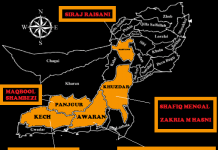
1. Balochistan – enforced disappearances and extrajudicial killings: Thousands of Baloch civilians remain missing after abduction by state forces. Dr Mahrang Baloch, the most prominent voice against disappearances, has been detained since March 2025 on fabricated charges. Mutilated bodies of abducted persons continue to appear across the province in the infamous “kill-and-dump” pattern documented by the HRCP and Amnesty International. When will Pakistan immediately release Dr Mahrang Baloch and all those held for peaceful activism, publish a complete list of the disappeared, grant the UN Working Group on Enforced Disappearances unrestricted access, end the kill-and-dump practice, prosecute responsible officers, and repeal the Actions in Aid of Civil Power Regulation that gives the military blanket impunity?
2. Democratic collapse and the annihilation of PTI: Former Prime Minister Imran Khan remains imprisoned on politically motivated charges widely condemned as retribution. Thousands of PTI workers and leaders have been arrested, tortured or driven into exile. The party was stripped of its election symbol, its rallies banned, and the 8 February 2024 elections were marred by rigging so blatant that even the EU’s own Election Observation Mission described the environment as “restrictive” and noted “systematic” attempts to prevent PTI candidates from campaigning. Will Pakistan immediately release Imran Khan and all PTI political prisoners, restore the party’s legal status and symbol, establish an independent judicial commission to investigate the 2024 rigging, and end the military establishment’s overt domination of civilian politics?
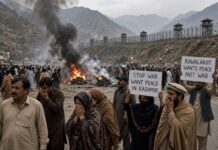
3. Former tribal districts (ex-FATA): Military and intelligence “operations” in the merged districts continue to cause civilian deaths, mass displacement while constitutional rights remain curtailed. Former parliamentarian Ali Wazir, who exposed these abuses, remains jailed on fabricated charges. When will Pakistan fully demilitarise the region, provide reparations to victims, restore unrestricted constitutional protections, and unconditionally release Ali Wazir and other Pashtun political detainees?
4. Pashtun Tahaffuz Movement (PTM): Manzoor Pashteen and dozens of PTM activists face sedition charges and constant harassment for demanding an end to military abuses and accountability for disappearances. Will Pakistan drop all charges against PTM members and cease treating peaceful demands for Pashtun rights as anti-state activity?
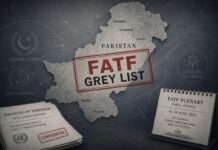
5. Money laundering and terrorist financing: Despite formal removal from the FATF grey list in 2022, hawala networks and UN-designated terrorist entities (LeT, JeM) still use Pakistani soil and financial channels with impunity. What irreversible, verifiable measures has Pakistan implemented in the past year to dismantle these networks once and for all?
6. Cross-border terrorism: UN-sanctioned terrorists including Masood Azhar and Hafiz Saeed remain free or under luxurious “house arrest.” India continues to provide evidence of Pakistan-based handlers directing attacks in Jammu & Kashmir. When will Pakistan dismantle the entire infrastructure of LeT, JeM and similar groups and prosecute or extradite their leaders?
7. GSP+ conditionality: The GSP+ Regulation mandates withdrawal when violations are “serious and systematic.” Every independent monitor confirms exactly that. Why should the EU not launch immediate suspension proceedings – as it has done with Sri Lanka, Bangladesh and Cambodia – unless Pakistan commits to measurable, time-bound reforms within six months?
Europe’s trade preferences are not charity; they are conditional. They are the EU’s own legal duty under Regulation (EU) 978/2012. Silence or vague assurances this week will tell the people of Balochistan and the Pashtun belt, Imran Khan’s unlawful incarceration and his party’s persecution, and victims of terrorism in South Asia whether European trade interests outweigh European values.
Pakistan’s marginalised communities – and Europe’s own credibility – cannot afford another empty handshake photo-op.
If the EU issues nothing more than bland joint statements, it will be read as green-lighting disappearances, political imprisonment, election theft and terrorist financing.