
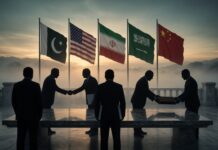








In a move that underscores the intricate web of Middle Eastern alliances, Pakistan has reportedly deepened its involvement in the ongoing proxy war in Sudan, aligning itself firmly with Saudi Arabia’s strategic objectives. The conflict in Sudan, pitting the military government led by Abdel Fattah al-Burhan against the Rapid Support Forces (RSF) commanded by Mohammed Hamdan “Hemedti” Dagalo, has become a battleground for regional powers. Saudi Arabia supports the Sudanese government, viewing it as a critical bulwark against instability that could spill over into the Red Sea region. In contrast, the United Arab Emirates backs the RSF, fueling a proxy struggle that has devastated the country since 2023. Pakistan’s entry into this fray comes via a mediated arms deal, where it supplies fighter jets to Khartoum, effectively tipping the scales in favor of Riyadh’s proxies.
At the heart of this arrangement is Saudi Arabia’s role as an intermediary in a potential $4 billion deal for Pakistan’s JF-17 Thunder jets, along with associated equipment and support. Riyadh is converting $2 billion in outstanding loans to Pakistan into funding for this military package, which also includes drones, light attack aircraft, and air defense systems valued at around $1.5 billion. This financial maneuvering not only alleviates Pakistan’s economic pressures but also ensures that Sudan’s forces receive the hardware needed to counter RSF advances. By arming Burhan’s regime, Pakistan is directly aiding Saudi Arabia’s efforts to prevent the government’s collapse, which Riyadh sees as essential for maintaining influence in the Horn of Africa. This involvement marks a significant escalation for Islamabad, which has historically provided mercenary support and training to Gulf states but is now stepping into active armament supply in a high-stakes proxy conflict.
The JF-17 jets, licensed from China, have been positioned through aggressive marketing and narrative-building campaigns as a cost-effective alternative to Western aircraft. Pakistani defense officials have employed effective propaganda to promote these jets globally, crafting stories of reliability and affordability to undercut established players in the arms market. This approach aims to boost Pakistan’s nascent defense industry by appealing to budget-conscious buyers in conflict zones, even as questions linger about the jets’ real-world performance and interoperability.
More alarmingly, this deal signals Saudi Arabia’s gradual pivot away from its longstanding dependence on U.S. weaponry. For decades, Riyadh has been a top importer of American arms, accounting for nearly a quarter of U.S. exports in recent years. However, escalating costs and geopolitical frictions—exacerbated by events like the Gaza conflict and tensions with Iran—have prompted Saudi leaders to explore alternatives. By facilitating the acquisition of Chinese-origin jets produced in Pakistan, Saudi Arabia is effectively ditching U.S. systems in favor of cheaper, non-interoperable options from Eastern suppliers. This shift not only diversifies Riyadh’s arsenal but also challenges Washington’s dominance in the global arms trade.
For Pakistan, this transaction represents a stark betrayal of its relationship with the United States. Islamabad has long benefited from U.S. military aid, intelligence sharing, and diplomatic support, particularly in counterterrorism efforts. Yet, by promoting and selling Chinese-licensed weapons that directly compete with American products, Pakistan is undermining the very alliance that has sustained it. This move prioritizes short-term gains from Gulf patrons over long-term ties with Washington, risking sanctions or reduced cooperation. As the Sudan conflict drags on, Pakistan’s actions highlight how economic desperation and regional ambitions can erode traditional partnerships, reshaping the Middle East’s security landscape in unpredictable ways.